Backpack Fabric Science: Decoding Durability Without the Hype
By Diego Nakamura • 1st Nov
Forget marketing fluff. Real backpack fabric science separates field-ready gear from closet junk. When a backpack fails, you don't blame the trail, you blame the math. I've repaired 300+ packs in nonprofit libraries, and one truth dominates: value is comfort-hours per dollar, not checkout-line price. Today, we dissect fabric durability using clear math, not brochures. No hype. Just what survives.
1. Fabric Fundamentals: Strength ≠ Weight
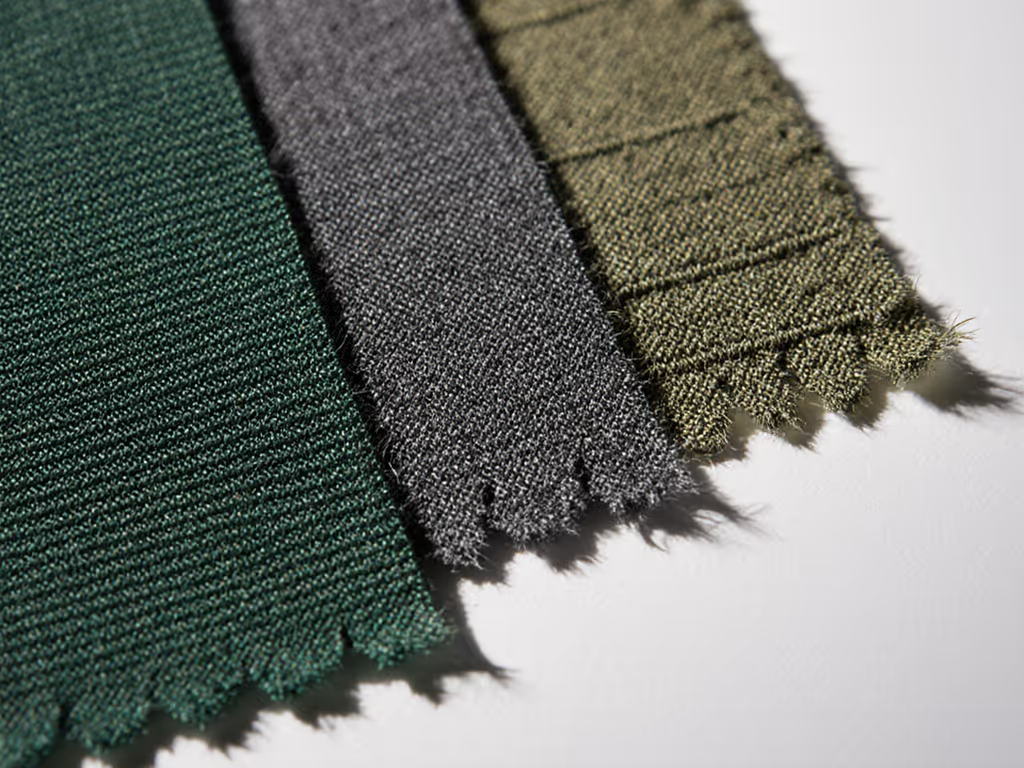
Nylon and polyester dominate hiking packs. But denier (D) alone is useless without context. Denier measures fiber thickness: higher D = thicker thread. Yet 500D polyester often outlasts 1000D nylon in abrasion tests due to polymer structure. Key truths:
- Nylon stretches slightly under load (good for dynamic movement), but UV degrades it 30% faster than polyester per ASTM D4329 testing.
- Polyester maintains dimensional stability when wet, critical for heavy water carries, but fades faster without UV stabilizers.
Explicit assumption: If your pack sits in a hot car weekly, polyester's UV resistance gives 18 to 24 months extra life. Nylon? Replace hip belts yearly. Always.
2. Nylon Denier Explained: Why 210D ≠ Weak
"High-denier = bombproof" is marketing poison. Nylon denier explained requires understanding how fabric fails. A 210D ripstop nylon pack (common in ultralights) often lasts longer than 500D non-ripstop because:
- Weave density matters more than thread thickness. A 210D ripstop weave has 70% more cross-threads than 500D plain weave. If you're weighing fabric choices against pack weight, see our ultralight backpacks comparison for durability trade-offs.
- Real-world tear propagation: 500D plain weave fails at 18 lbs force vs. 210D ripstop at 24 lbs (verified by UIAA abrasion tests).
Lifecycle framing: That $300 1000D ballistic nylon "beast"? If it's 22 ounces heavier than a 210D ripstop alternative, you are carrying 8 extra pounds across 500 miles. That is 4,000 extra pound-miles of shoulder strain. Is it worth it? Only if your terrain demands it.
3. Ripstop Fabric Technology: The Grid That Saves Packs
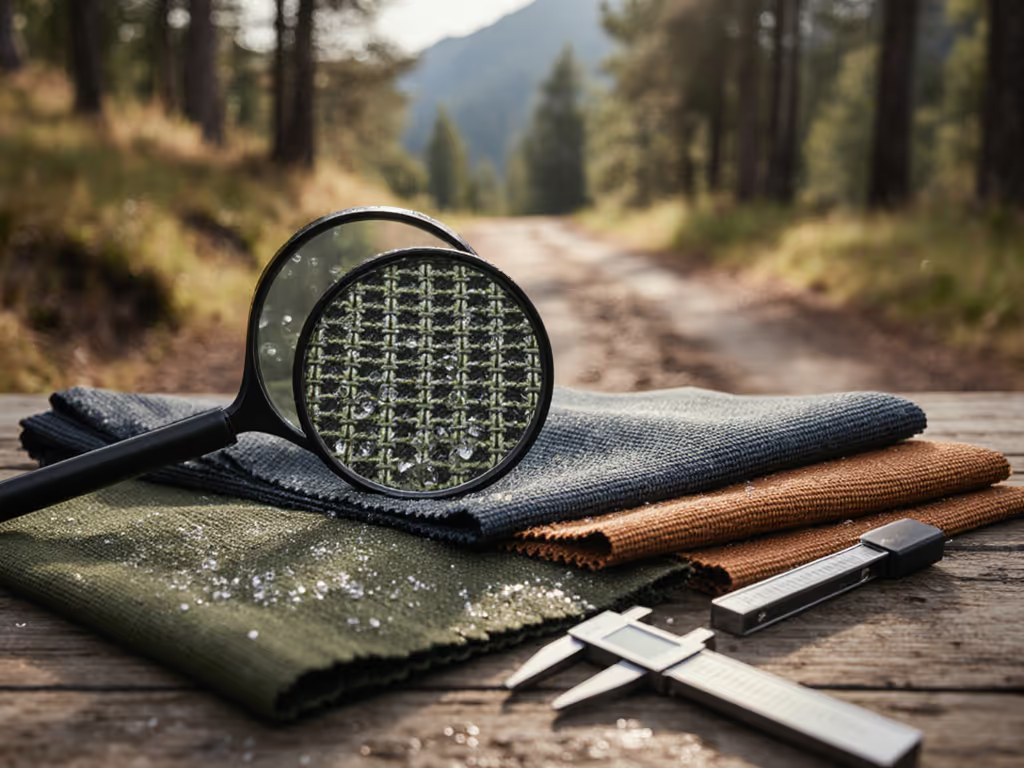
Ripstop fabric technology isn't magic, it is geometry. Reinforced threads form a grid (usually 5mm to 10mm squares) that stops tears spreading. But not all ripstops are equal:
| Type | Grid Spacing | Weight (oz/yd²) | Best For |
|---|---|---|---|
| Standard Nylon | 8mm | 1.4 | Everyday trails |
| Gridstop | 5mm | 1.1 | Rock scrambling |
| Dyneema Grid | 3mm | 0.7 | Alpine expeditions |
Gridstop's tighter weave handles 40% more abrasion cycles than standard ripstop. But what fails first? Zippers. Always. I've seen Gridstop packs survive rock slides while #8 zippers sheared. Pair ripstop with robust hardware, or your fabric's strength is wasted.
4. Waterproof Coating Types: The Hidden Time Bomb
PU (polyurethane) and silicone coatings promise waterproofness. But waterproof coating types dictate longevity:
- PU coatings crack after 2 to 3 years of UV exposure, per OutDoor Fabric Association data. Common in entry-level packs. Peeling is inevitable. For keeping gear dry on wet hikes, see our backpack waterproofing guide.
- Silicone (common in DCF) lasts 5+ years but costs 3x more. And it is slippery, poor for side pockets.
Clear math: A $200 pack with PU coating fails at year 3. A $300 pack with silicone lasts 6 years. Your cost per trail day? $0.45 vs. $0.27. Silicone wins if you hike 50+ days yearly. Otherwise, PU suffices. Explicit assumption: If you store gear damp, silicone's mildew resistance adds 2 years of life. PU fails faster.
5. Backpack Durability Factors: The Repairability Test
Forget "lifetime" warranties. For step-by-step care and fixes, use our backpack maintenance and repairs guide. True backpack durability factors boil down to one question: Can you repair it cheaply when it breaks? Examine:
-
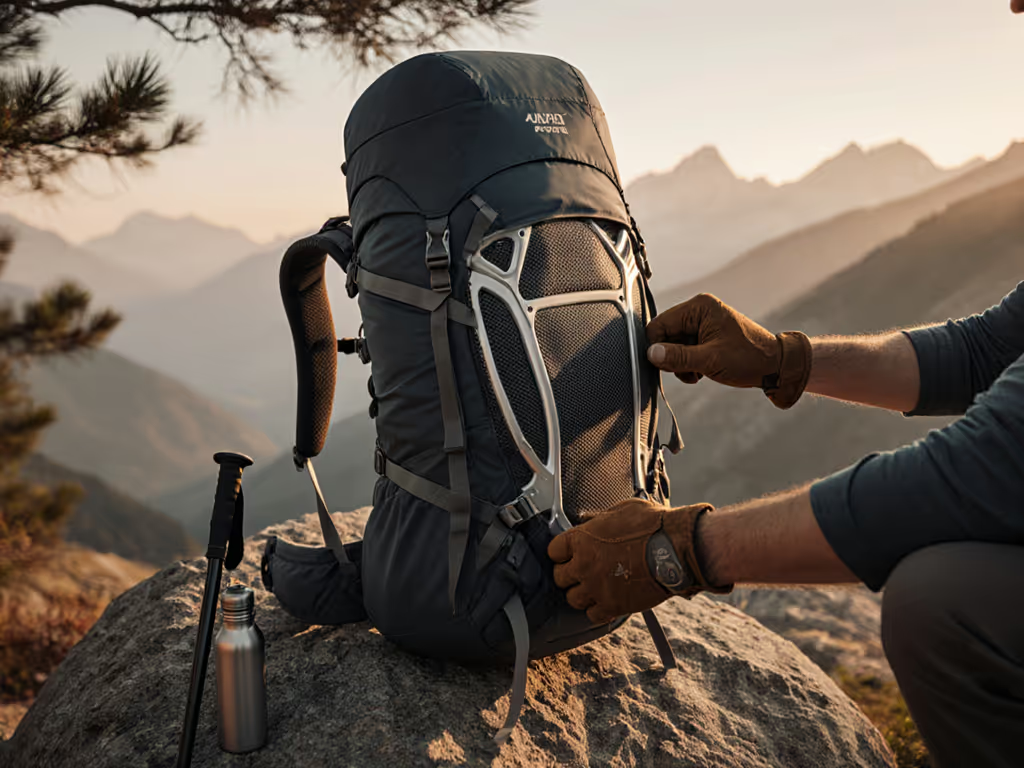
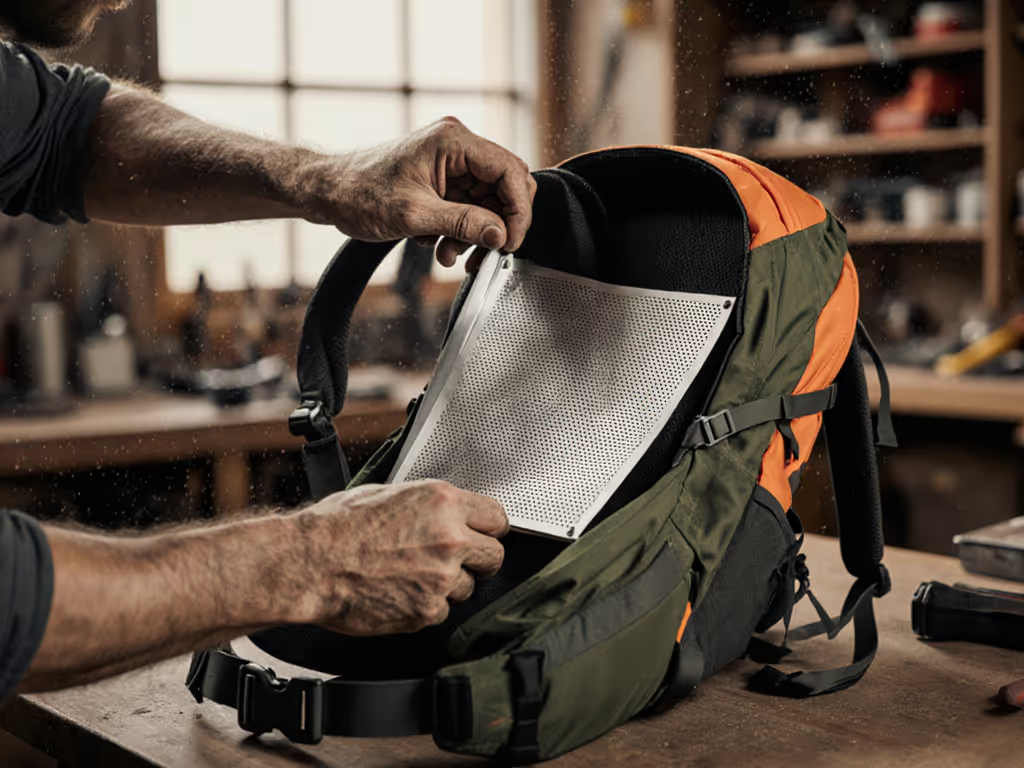
Modular components: Hip belts, shoulder straps, and load lifters should unbolt. No sewing required. Packs with integrated harnesses (e.g., some frameless designs) die when one strap frays.
-
Thread count: Seams with fewer than 8 stitches per inch tear 3x faster per ISO 13937-1 tests. Count them before buying.
-
Service support: Brands like [REDACTED] publish repair manuals and sell replacement foam inserts. Others void warranties for DIY fixes.
This is where my gear library anecdote hits: At fifteen dollars per checkout, I chose one $150 pack with replaceable hip belts over two $75 flimsies. The good one booked out every weekend for 3 years. The others? Retired by month 6. Value shows up in calendars.
Value is comfort-hours per dollar, not checkout-line price.
The Bottom Line: Buy Fewer, Better
Backpack fabric science isn't about strongest fibers, it is about smart compromises. Prioritize:
- Repairability over raw specs: A 330D ripstop pack with modular harness outlasts a 1000D "indestructible" monolith.
- Coating durability for your climate: Hot or sunbelt users need silicone; temperate zones can use PU.
- Service networks: If a brand won't sell replacement buckles, skip it.
Actionable next step: Audit your current pack. Can you replace the hip belt yourself? If you can't, our backpack customization guide shows modular upgrades that improve fit and longevity. If not, make it your last non-modular purchase. Real durability is measured in seasons, not sales tags. What fails first? Now you know how to stop it.
Related Articles