
Backpack Frame Sheet Guide: Adjust for Stability
By Maya Torres • 12th Apr
When you load a backpack frame sheet, you're not just adding plastic to your pack, you're engineering how 30, 35, even 40 pounds of gear distributes across your back and hips. The difference between a pack that feels secure at real trail weights and one that shifts and slumps often comes down to frame sheet material choice, adjustment technique, and whether you understand why the mechanics matter. For a deeper look at how different suspensions move weight, see our backpack suspension systems comparison.
What Does a Frame Sheet Do?
Q: Why do I need a frame sheet at all if I'm carrying 25-35 pounds?
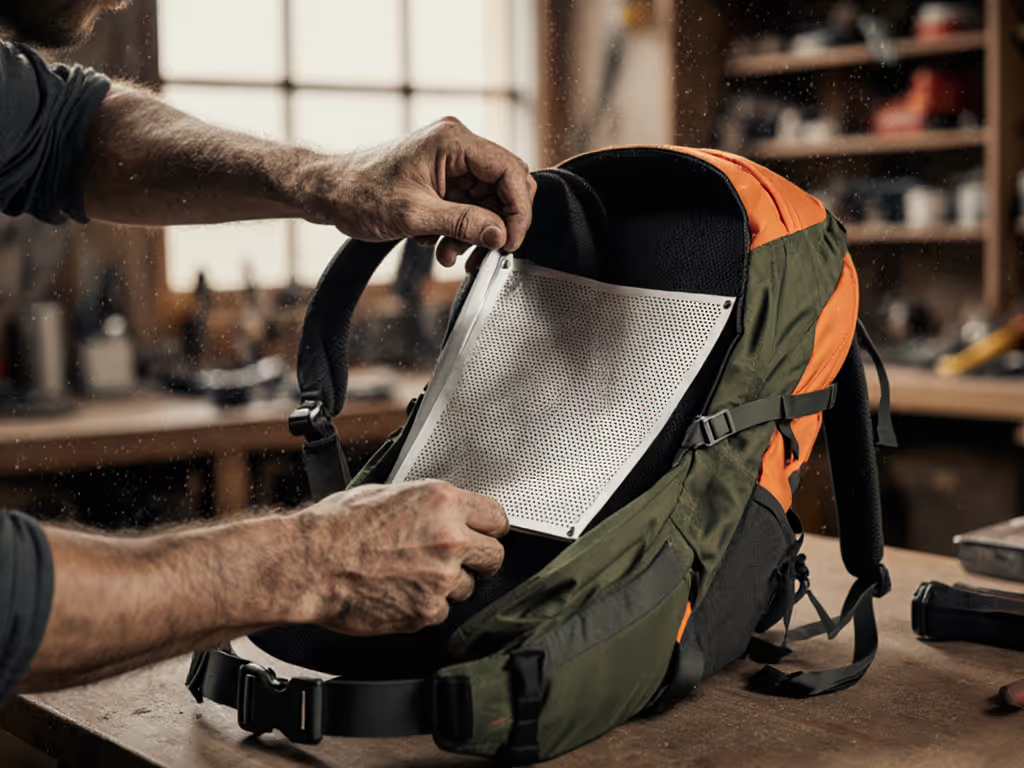
A: A frame sheet is a thin, rigid panel (typically plastic or polystyrene) that sits inside the backpack against your back, separated from your skin by foam padding. Its job is to transfer your pack's load vertically down your spine and laterally to your hip belt, rather than letting the pack collapse into a rounded shape or poke hard objects into your back. Without one, your pack rounds off under load (imagine a beer barrel shape), and your shoulders do all the work.
The frame sheet also prevents pointy gear (tent stakes, stakes from trekking pole assemblies, sharp camera hardware) from poking through the foam and causing hotspots. For mixed-terrain trips where you're scrambling, side-hilling, and navigating descent angles, a well-tuned frame sheet keeps your center of gravity stable. The carry goes quiet when load paths line up. That silence is the frame working correctly, transferring load so your body doesn't fight for balance on every uneven step.
Q: What's the difference between a frame sheet and a full internal frame?
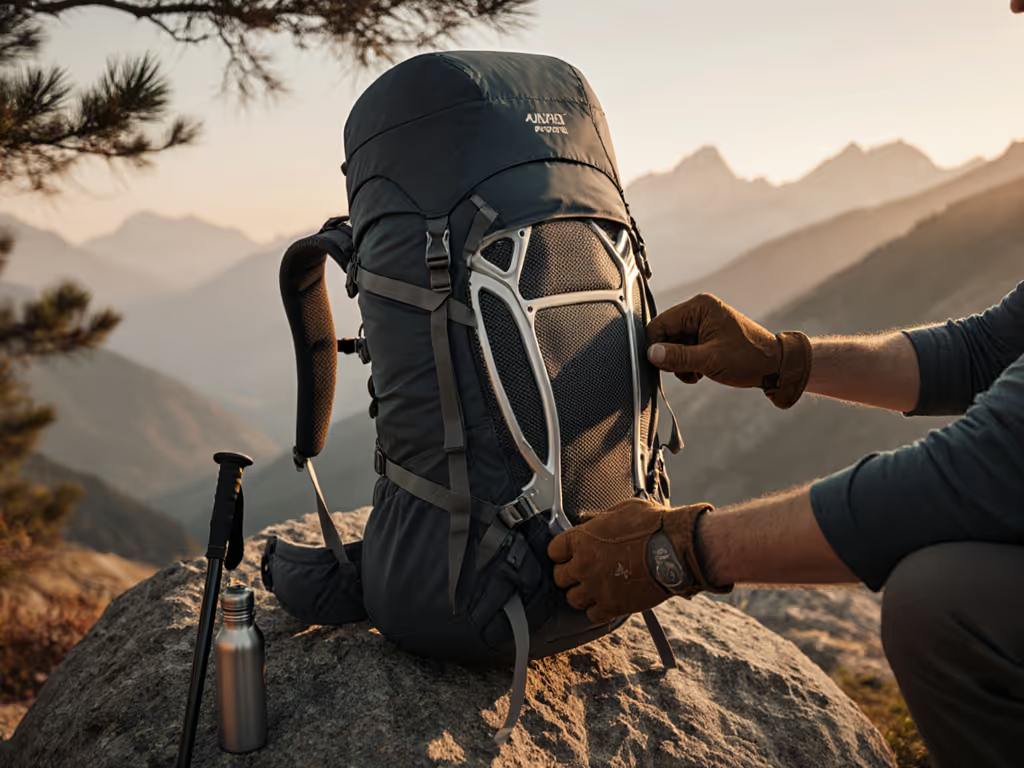
A: A frame sheet alone is passive, just a stiff panel. An internal frame combines a frame sheet with a bendable aluminum stay (typically 6061 or 7075 aluminum rods). The stay allows you to customize how much the frame conforms to your spine's curve. A frame sheet plus a proper aluminum stay costs more weight (Tom Bihn's Synapse 25 internal frame is 9.6 ounces, while simpler stays or frame sheets alone run lighter), but the trade-off is that you can lift load off your shoulders and onto your hips even with a narrow hip belt. If you're carrying 30-40 pounds regularly, the aluminum stay is a worthwhile investment.
How Frame Sheet Materials Affect Weight Distribution
Q: Do different frame sheet materials carry loads differently?
A: Yes, and the difference is measurable. Corrugated polystyrene (the material used in U.S. Postal Service mail crates) is stiffer than flexible HDPE plastic; both are lighter than aluminum. A stiffer frame transfers load more directly to the hip belt and lower back, meaning your shoulders feel less pull. A flexible HDPE sheet (like Granite Gear's Vapor Trail at 32.2 ounces total pack weight) relies on a compression system to create what's called a "virtual frame": the gear you pack becomes part of the structure.
The tension here is real: a very stiff frame can feel intrusive on light loads (15-20 pounds) but becomes your friend at 28-35 pounds. A flexible frame is more comfortable at low weights and transitions smoothly, but if you're inconsistent about packing or carry oddly shaped gear, it won't perform as reliably when you need stability most. Know your typical load range before you choose.
Q: How does frame sheet stiffness affect weight distribution when I'm carrying different trip weights?
A: A frame sheet's stiffness becomes more important as load increases. At 15 pounds, a flexible HDPE sheet or even a frameless pack feels fine, your gear and careful packing do the work. At 25-30 pounds, frame stiffness begins to matter noticeably; a stiffer polystyrene or aluminum-backed design keeps your shoulders more stable. At 35-40 pounds, frame stiffness is non-negotiable if you want to avoid shoulder and hip-belt discomfort over a full day.
This is why ultralight packs often carry a "max recommended weight" of 25-35 pounds: beyond that, a minimal frame sheet fails to distribute load evenly, and you risk discomfort or, in extreme cases, frame delamination or failure. Set your ceiling confidently with our backpack weight limits guide.
Frame Sheet Adjustment and Customization
Q: Can I adjust my frame sheet once the pack is built?
A: Depends on the design. If your pack has a removable aluminum stay (bent inside the pack), you can remove it and re-bend it for a different spine angle. This is useful if you have a longer or shorter torso than the pack's design assumes, or if you want to test whether more or less curve helps your fit. If you're unsure of your size, use our step-by-step torso length measurement guide to dial it in. Removable frame sheets are rarer (most packs glue or sew the frame sheet permanently), but some cottage and modular pack makers offer them as an upgrade option.
If your frame is fixed, micro-adjustments happen elsewhere: tightening or loosening the hip belt, adjusting load lifters, and packing strategically to move your center of gravity forward or aft. These techniques matter more than you might expect; a 1-inch shift in hip-belt position or load lifter angle can change how a 32-pound pack feels on a 5-mile climb.
Q: What are frame sheet adjustment techniques I can use on the trail?
A: In the field, your real adjustments are:
- Hip belt position: Raise it slightly to shift more load to your hips and reduce shoulder strain; lower it if you're breathing hard (tight belts restrict diaphragm motion).
- Load lifters: Tighten them if the pack is pulling you backward; loosen them if the pack is jabbing your shoulders. These small straps (running from the top of your pack to your shoulder harness) angle your load forward, critical for uneven terrain.
- Pack height and chest strap: Micro-adjust to keep your center of gravity over your hips, not your shoulders.
- Packing order and weight distribution: Heavy items closer to your spine and slightly up reduces sway and keeps the frame working efficiently.
The goal is to dial in stability on moderate terrain before you hit steep or technical ground. A stable pack at 2,000 feet is still stable at 8,000 feet. Get it right early.
Removable Frame Sheet Benefits and Trade-Offs
Q: Are removable frame sheets worth the complexity?
A: Removable frame sheets are compelling for three groups: hikers who swap between 15-pound day hikes and 35-pound backpacking trips (you can leave the sheet out to save weight on light days), those dealing with chronic back or shoulder issues who want to test frame stiffness precisely, and tinkerers who want to experiment with spine curve and load angle.
The downside is that removable designs add seams, potential weak points, and cost (both in money and in the labor to retrofit a pack). For most hikers with a single primary trip type (say, 28-32 pound weekend trips), a fixed, well-tuned frame is more durable and simpler.
Q: Can I remove my frame sheet entirely for a UL day hike?
A: Technically yes, but check whether your pack's back panel is load-bearing without the frame. Some packs (like the Tom Bihn Daylight) are designed frameless from the start, with minimal padding and gear as structure. If your pack expects a frame to support the back panel and prevent collapse, removing the frame leaves you with a slouchy, inefficient carry even at 12 pounds.
Better approach: size your pack for your most common trip weight. If that's 28-32 pounds for three-season backpacking, keep the frame in. If your load varies wildly, consider two packs or a pack line where a smaller sibling fits your lighter trips.
Frame Sheet Maintenance and Longevity
Q: How do I maintain a frame sheet?
A: Frame sheet maintenance is straightforward because the sheet itself doesn't move:
- Inspect for cracks or delamination after long trips, especially if you've taken hard falls or caught the pack on rocks. A hairline crack in polystyrene can propagate under load.
- Check the frame-to-pack connection: if the sheet is glued or sewn, look for separation at seams.
- Keep the foam padding clean: dirt and moisture can degrade the interface between your back, the padding, and the frame sheet.
- Avoid excess moisture: store your pack dry. A frame sheet that stays wet invites mold in the foam and can weaken adhesives over time.
A well-maintained frame sheet lasts as long as the pack (often 3-5+ seasons of regular use if the pack's fabric doesn't wear through first).
Q: What should I do if my frame sheet cracks?
A: A small crack in polystyrene or HDPE typically doesn't mean catastrophic failure, the sheet is still load-bearing. However, don't ignore it. Crack repair options:
- Field repair: Clear tape (duct or Gorilla tape) on both sides can stabilize a crack temporarily. Not elegant, but functional.
- Shop repair: Many pack companies or local gear repair services can patch a frame sheet with epoxy or replace it entirely if the damage is severe.
- DIY replacement: If you're handy, you can extract the old frame sheet and glue in a new one (typically 1/8-inch polystyrene or HDPE sourced from a plastic supplier).
Frames that delaminate (layers separate) are harder to repair and usually warrant a frame replacement or a new pack if the damage is extensive.
When Frame Sheet Stiffness Matters Most
Q: How does backpack frame stiffness adjustment change how my pack feels on steep terrain?
A: On a steep ascent or descent, frame stiffness prevents sway and keeps your load predictable. A stiff frame (thick polystyrene or aluminum-backed) holds your center of gravity in place; you're not fighting the pack shifting side to side as you scramble. This is why a lighter, more flexible frame can feel unstable above 25-30 pounds on uneven ground, it moves with the pack's contents rather than anchoring them.
On flat or rolling terrain, frame stiffness matters less. On technical descents or rocky side-hilling, it's the difference between a controlled descent and a high-anxiety carry where you're constantly rebalancing.
Q: Do I need a stiff frame if I'm only doing day hikes at 15-20 pounds?
A: No. A lighter frame sheet or even a frameless pack works fine for day trips. But if you ever scale up to overnight or multi-day trips at 28-35 pounds, you'll notice the difference immediately. Many hikers upgrade to a sturdier internal frame precisely because they outgrow their day-pack comfort on heavier trips.
Key Takeaways: Frame Sheet Adjustment for Stability
Frame sheets work through stability, not magic. A well-matched frame sheet material for your load range, properly adjusted on the trail, and maintained over seasons is an investment in comfort and durability. Whether you choose a minimal HDPE sheet for flexibility, a stiffer polystyrene design for load transfer, or a full aluminum-backed internal frame depends on your typical trip weight, terrain, and body geometry.
The objective is clear: objective fit and stable load transfer beat marketing claims. Start by knowing your typical load weight and terrain. Match your frame sheet choice to that. Then dial in your on-trail adjustments (hip belt position, load lifters, packing order) until the carry settles. When load paths line up, you'll know it. The frame speaks under load with a quiet, predictable stability.
Further Exploration
If frame sheet tuning is new to you, the next step is to load your pack to your typical trip weight and spend time on mixed terrain (climbs, descents, side-hilling) to feel how your current frame performs. Note where you feel pressure (shoulders, hips, lower back). Then experiment: adjust your load lifters a quarter-inch, reposition heavy gear closer to your spine, or test your hip belt one notch tighter or looser. For packing order and item placement, follow these pro weight distribution tips. Small shifts reveal a lot.
For hikers managing body-specific fit challenges (long torsos, narrow hips, broad shoulders), frame sheet stiffness and spine curve become even more critical. Consider consulting fit databases or specialist retailers where body-type-matched reviews can point you toward frames that truly work for your geometry.
Finally, if your current pack leaves you uncomfortable at your trip weight after adjustments, that's data, not a failure. It tells you whether you need a stiffer frame, a different frame curvature, or a pack designed for a heavier load range. The frame sheet that works at 25 pounds may not work at 35 pounds. Know your load. Choose your frame accordingly.
Related Articles