
Backpack Frame Sheet Guide: Adjust Stiffness
By Kwame Adu • 10th May
Introduction
A backpack frame sheet guide isn't marketing material (it's the missing manual most hikers never read but desperately need). Your pack's frame sheet is the structural spine that determines whether 30 pounds feels distributed across your hips or hanging from your shoulders. Understanding frame sheet adjustment techniques puts real control in your hands: you can tune stiffness to match your body, load, and terrain without replacing the entire pack.
Frame sheets work silently, and most users never touch them. Yet here's what matters: the stiffness of that sheet (whether corrugated plastic, layered composite, or aluminum-reinforced) directly controls how load transfers from the bag to your skeletal system. Get it right, and you'll feel stable on side-hills and scrambles. Get it wrong, and you're fighting the pack's geometry every step.
This guide is built on a simple principle: repairable, adjustable design keeps gear in service longer. Standard, replaceable components make field fixes possible.
Understanding Frame Sheets and Their Role
What a Frame Sheet Does
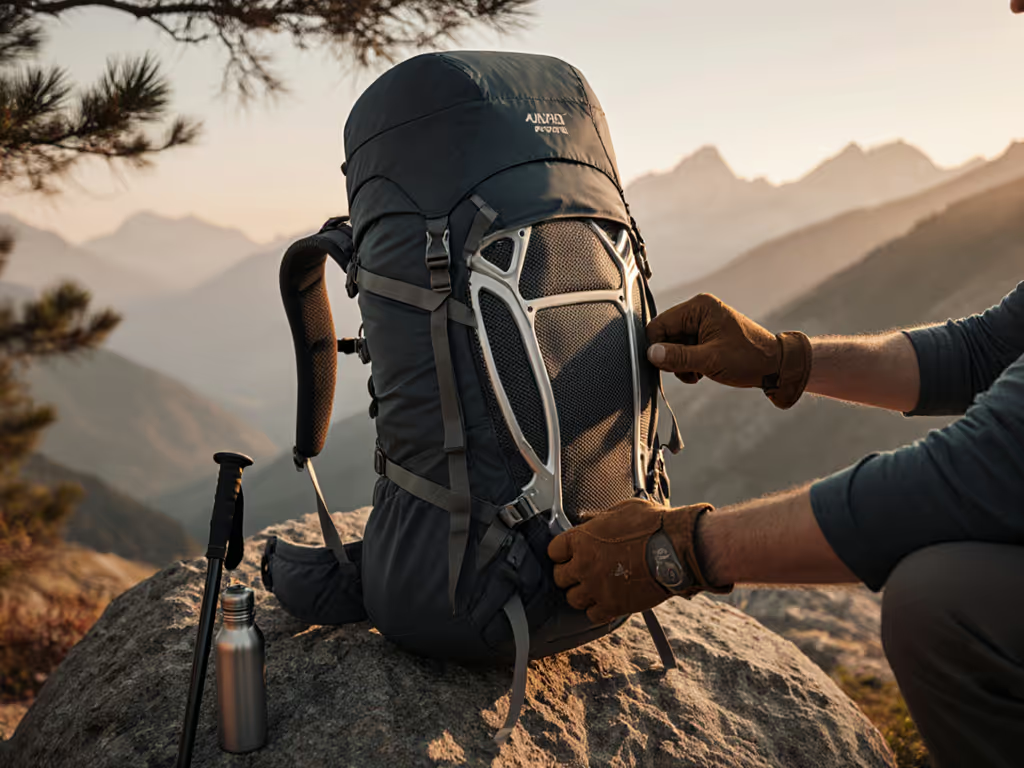
A frame sheet is a rigid insert running the length of your pack's back panel. Its job is to bridge the gap between where loads hang (in the main compartment and pockets) and where they're carried: your hips, via the hip belt.
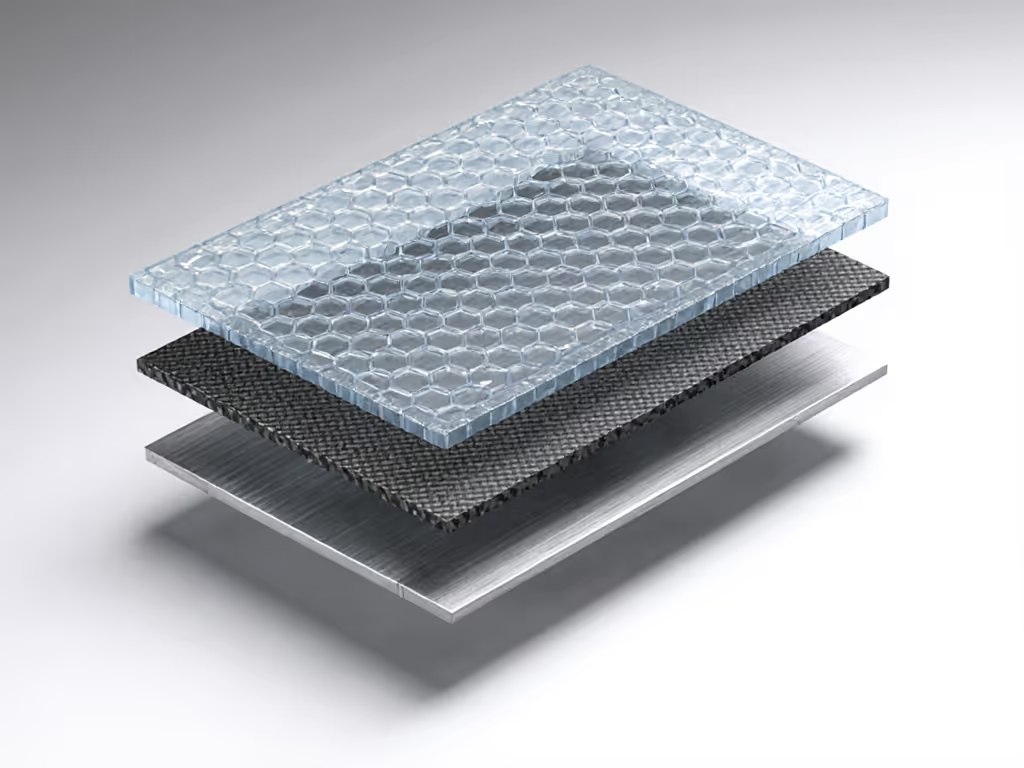
Common frame sheet materials include:
- Corrugated polystyrene: Lightweight, semi-rigid, absorbs flex without brittleness. Used in ultralight packs; flexes under heavy loads.
- Composite laminates: Stiffer than polystyrene, more durable; adds 1-3 ounces.
- Aluminum or aluminum-composite: Maximum stiffness; typical in load-carrying packs designed for 30+ pounds regularly.
The frame sheet works with load-lifter straps (angling down from shoulder to pack) and the hip belt. If the frame is too floppy, load migrates upward onto your shoulders. If over-stiffened, you lose the pack's ability to flex with your body on uneven ground, and pressure concentrates in hotspots.
The Weight vs. Stiffness Trade-off
Lighter packs feature thinner, more flexible frame sheets to save ounces. That works fine at 15-20 pounds. For clear thresholds by pack type, read our backpack weight limits guide. Bump the load to 28-35 pounds (typical for a three-day trip), and that flexibility becomes a liability. The pack collapses toward your lumbar spine, and your shoulders take weight they shouldn't.
Data confirms the reality: most hikers carrying overnight loads (sleeping bag, water, food, shelter) feel noticeably better with a stiffer frame. The extra 2-4 ounces of frame material is money well spent if it eliminates a painful descent or back ache.
How Frame Stiffness Affects Your Carry
Load Transfer and Weight Distribution
When you load your pack, gravity pulls straight down. The frame sheet's stiffness determines the angle at which that force redirects. A stiffer frame holds the load closer to your body's center of gravity, transferring more weight to your hips (where your pelvis handles it easily) and less to your shoulders and neck (where strain accumulates fast).
A loose frame sheet lets the load sag away from your back. You feel it pulling your shoulders backward, and your traps and neck muscles work overtime. Over four hours, that's fatigue. Over a full day, that's pain.
Stability on Terrain
A stiff frame sheet prevents excessive side-to-side movement. On a steep side-hill traverse, a floppy pack rocks with each step. That constant micro-adjustment is annoying on short hikes but exhausting on longer ones. A stiffer frame keeps the load planted, so you're moving your body, not fighting the pack's momentum.
Failure Modes You'll Recognize
Frame sheets fail predictably:
- Polystyrene cracks along fold lines (usually where the sheet bends around your lower back).
- Composite laminates delaminate (layers separate) if water intrudes or UV exposure weakens the bond.
- Aluminum-composite sheets develop localized creases that propagate into breaks.
All are field-identifiable if you know what to look for.
Removable Frame Sheet Benefits
Why Modularity Matters
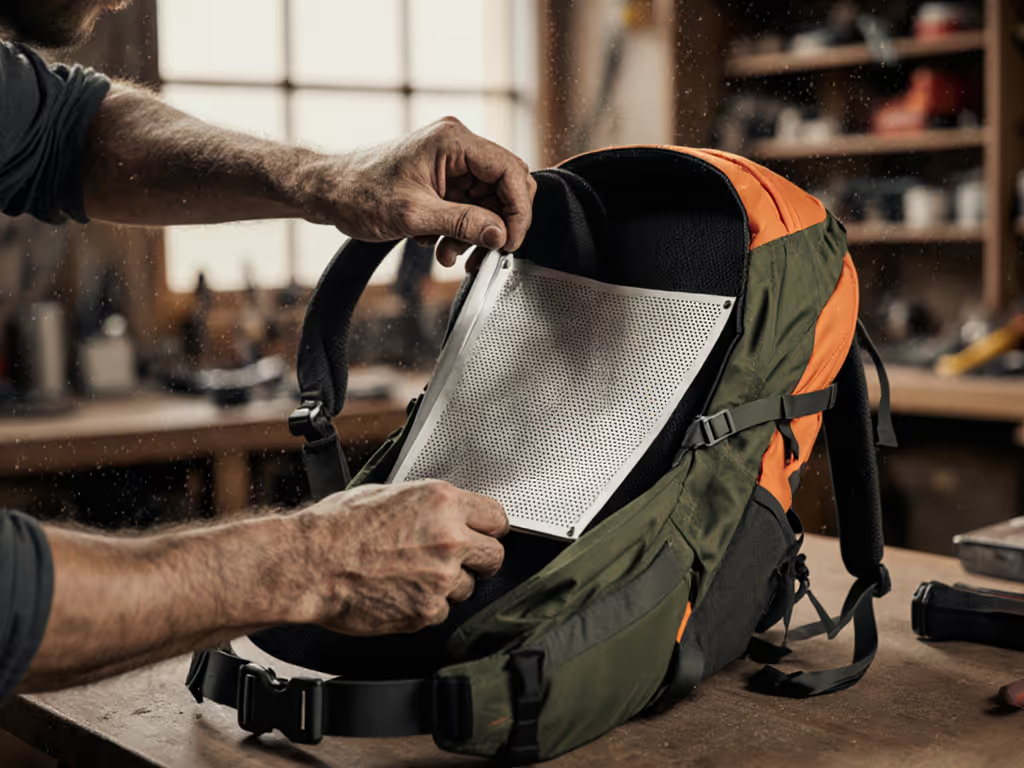
Many modern packs use removable frame sheets held by stitching to a back panel or velcro loops, not glued or riveted. That design choice is deliberate. When your frame cracks or needs a stiffness tweak, you're not buying a new pack; you're replacing a $20-40 insert.
Here's where it crystallizes: standard parts make trailside fixes boring (and that's good). A pack with a proprietary frame glued into the back panel is dead the moment that sheet fails. A pack with a removable frame sheet is fixable. That distinction ripples through the entire lifecycle of your gear.
Future-Proofing Your Pack
A removable frame lets you experiment. Have a lightweight day-hike pack that feels mushy at 25 pounds? You can swap in a slightly stiffer sheet, test it, and keep it if it helps. Running a winter trip that demands load stability? Slide in the stiff variant for those weeks. You're not locked into one geometry.
Adjustment Techniques: A Practical Approach
Tools You'll Need
- Seam ripper or small scissors (for cutting stitches)
- Flat-head screwdriver (for prying taped-in sheets)
- Replacement frame sheet (optional) or heat source (for bending existing sheet)
- Needle and thread (for re-stitching)
How to Access Your Frame Sheet
- Remove back padding if your pack has one. Many have thin foam glued or adhered over the frame sheet. Gently peel or cut this back to expose the sheet.
- Check the fastening method: stitched, glued, velcroed, or taped? Velcro and stitching are user-friendly. Glue requires heat and a flat tool to separate without tearing pack fabric.
- Measure the sheet dimensions and thickness. Document what you have so you can source a replacement or assess stiffness changes.
Field-Fix First: Temporary Stiffness Adjustments
If you're midtrip and your frame feels too floppy:
- Add internal bracing: Pack gear denser, heavy items (fuel, water, food) closer to the frame sheet. This provides passive support and shifts the load's center of gravity slightly inward. For complete packing layouts that improve balance, see our weight distribution guide.
- Re-cinch load lifters: Many hikers don't tighten them enough. Crank them down so the pack top pulls back slightly, reducing forward sag.
- Adjust hip belt fit: A loose hip belt can't redirect load properly. Tighten until it sits snugly on your hip bones; this alone recovers 3-5 pounds of perceived shoulder load.
For a permanent fix, once you're back:
- Source a stiffer replacement sheet in the same size. Your pack maker often sells these.
- Remove the old sheet using the appropriate method.
- Install the new sheet using the same or upgraded fastening method.
- Re-apply padding if needed; stitch it cleanly using a box-stitch or cross-stitch pattern to prevent seam fatigue.
Testing and Maintenance
After a stiffness change, real-world testing is non-negotiable. Load your pack to the weight you'll carry most often. Spend two hours on varied terrain: flat walking, climbs, side-hills, scrambling, descending. Note stability, pressure points, and adjustability.
Inspect your frame sheet every season:
- Check for cracks, especially along fold lines.
- Look for discoloration or soft spots (moisture intrusion in composite sheets).
- Feel for delamination or rough patches.
- If removable, pull it out and inspect both sides.
Store your pack away from direct sunlight and heat. Get step-by-step off-season care in our backpack storage guide. UV exposure and high temperatures degrade plastic and composite sheets over time.
Standard Hardware and Longevity
I once watched a hip-belt buckle shatter 12 miles from the road during week three of a trail crew season. We cannibalized a sternum slider and a spare strap, rigged a temporary anchor system, and kept the pack in service for six more days until we reached town. That five-minute trailside fix burned in a lesson: smart, standard hardware beats fancy, non-serviceable bits every time.
The same logic applies to frame sheets. If your frame is proprietary and glued to your pack's back panel, one cracked sheet means a $300 paperweight. If your frame is standard and removable, you're thirty minutes of sewing away from a working pack again.
That's what longevity looks like.
Further Exploration
Your frame sheet is one piece of the fit puzzle. The next step is understanding how torso length, hip belt placement, and load-lifter angles work together. Explore your pack's adjustment range and trial different frame stiffnesses if your model supports it. Document what feels best under your trip-weight loads.
Connect with repair communities online or at local workshops. Learn the stitching patterns (running stitch, box-stitch, cross-stitch) that reinforce frame installations. Test your adjustments on short, local hikes before multiday trips. Small changes compound into big comfort gains over a season.
Related Articles