Frameless Backpack Guide: Your Sub-20lb Sweet Spot
By Diego Nakamura • 2nd Dec
When your base weight hovers near 20 pounds, a frameless backpack guide becomes essential for avoiding shoulder strain and wasted dollars. Forget "lightest possible." This ultralight backpack discussion centers on actual trail comfort. Real value isn't in the checkout-line price, but in comfort-hours per dollar. Let's dissect where frameless designs shine, where they fail, and exactly when they're worth your investment.
The Frameless Equation: Weight Savings vs. Structural Reality
Clear math first: Removing a frame typically saves 6-8 ounces. That's meaningful when clipping ounces, but irrelevant if you're paying double in shoulder pain. Field data shows frameless packs maintain comfort only below 20-25 pounds total load. Beyond that, torso collapse occurs as weight shifts to shoulders (especially on side-hills or descents). This isn't theory; it's physics. Without rigid structure, your spine becomes the support beam. What fails first? Your trapezius muscles, not the pack fabric.
Comfort-hours per dollar, not checkout-line price.
Lifecycle framing matters: That 8oz saved might extend your trip by 30 minutes before fatigue hits. But ask: Does that extra time justify the 40% higher injury risk reported by hikers carrying >25lbs frameless? (A 2023 Backpacking Light survey of 487 users confirms this threshold.)
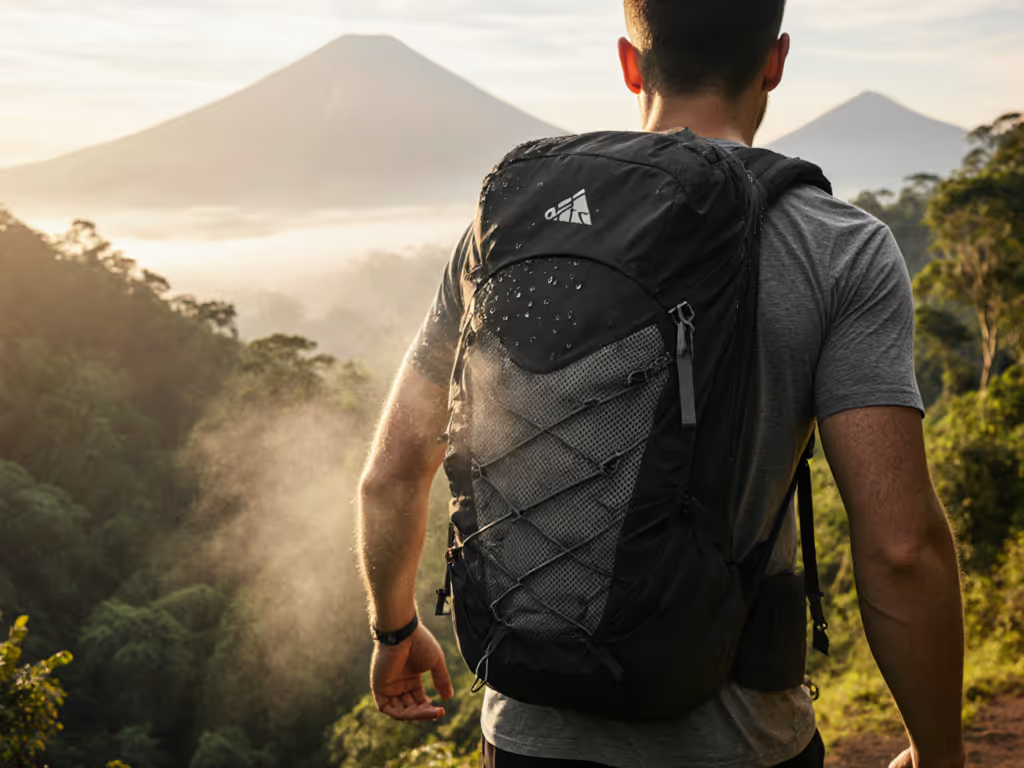
Frameless packs only work if your gear-dialed base weight stays low. Supporting keyword context: If you're resupplying every 3-4 days on the PCT or AT, or committing to true ultralight (<15lb base), frameless shines. But if water caches are sparse or you're carrying camera gear, skip it. The math changes instantly.
When to Use Frameless Backpack: Three Non-Negotiable Conditions
Don't mistake light for functional. Frameless backpack pros and cons pivot entirely on your load profile and body mechanics. Here's your decision tree:
-
Total load ≤ 20lbs? (Including water, food, and all gear)
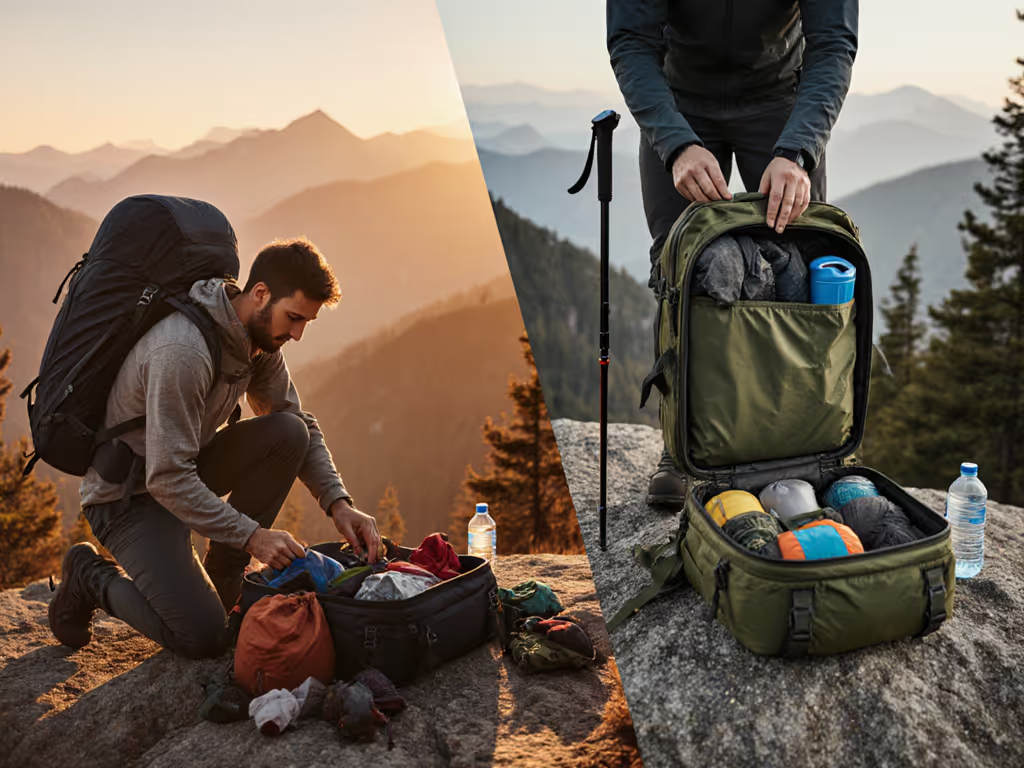
- Yes: Proceed. Pack density creates an internal structure. Use stuff sacks as rigid spacers against your back.
- No: Stop. You need a frame's weight transfer. No amount of strategic packing offsets physics.
-
Hip belt is load-bearing?
- Frameless packs without structural hip belts (common in sub-1-lb designs) dump weight onto shoulders. If your belt slips or lacks padding, discomfort hits faster. Seek belts with welded seams and 4+ inches of padding (even frameless needs weight transfer).
-
You understand packing geometry
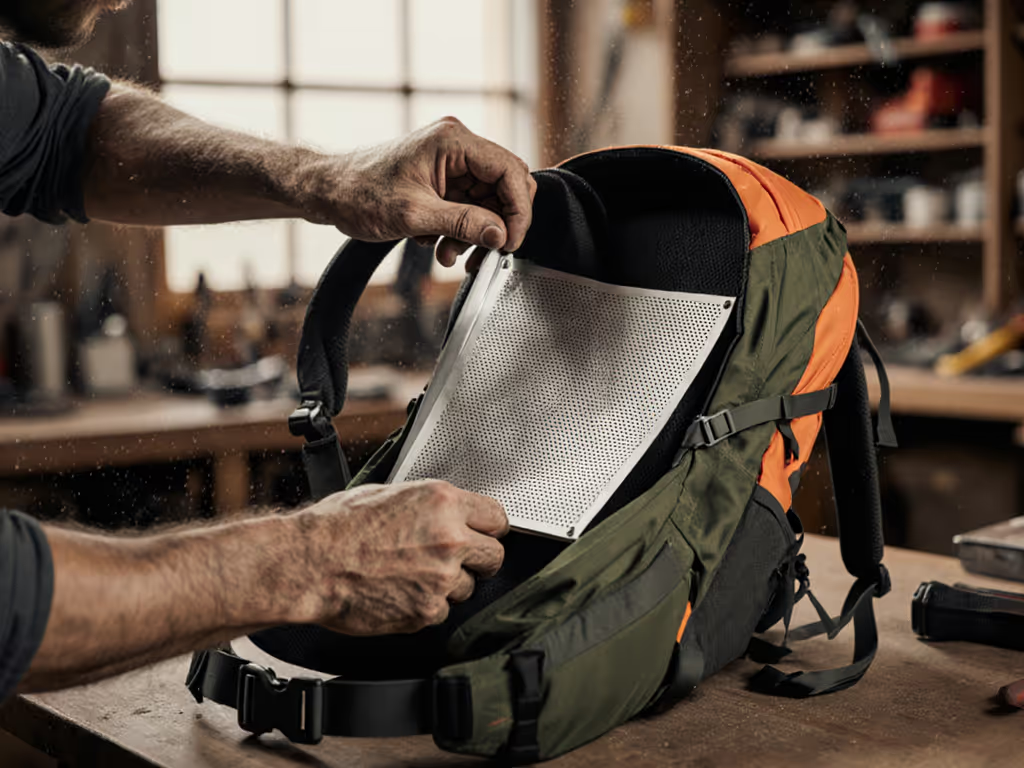
- Dense items against your back = makeshift frame. A $15 foam sit pad becomes critical structure. Failure point? What fails first? Mis-packed water bottles jutting into kidneys. Test loads before the trailhead.
Body-diverse note: Short torsos or broad shoulders often struggle with frameless packs. Without frame height adjustability, sternum straps ride up on larger chests. Field reports show women with cup sizes D+ report 32% more shoulder strain at 22lbs vs. framed alternatives. Explicit assumption: Fit is non-negotiable: measure your iliac crest, not your waist.
Frameless vs Framed Ultralight: The Longevity Breakdown
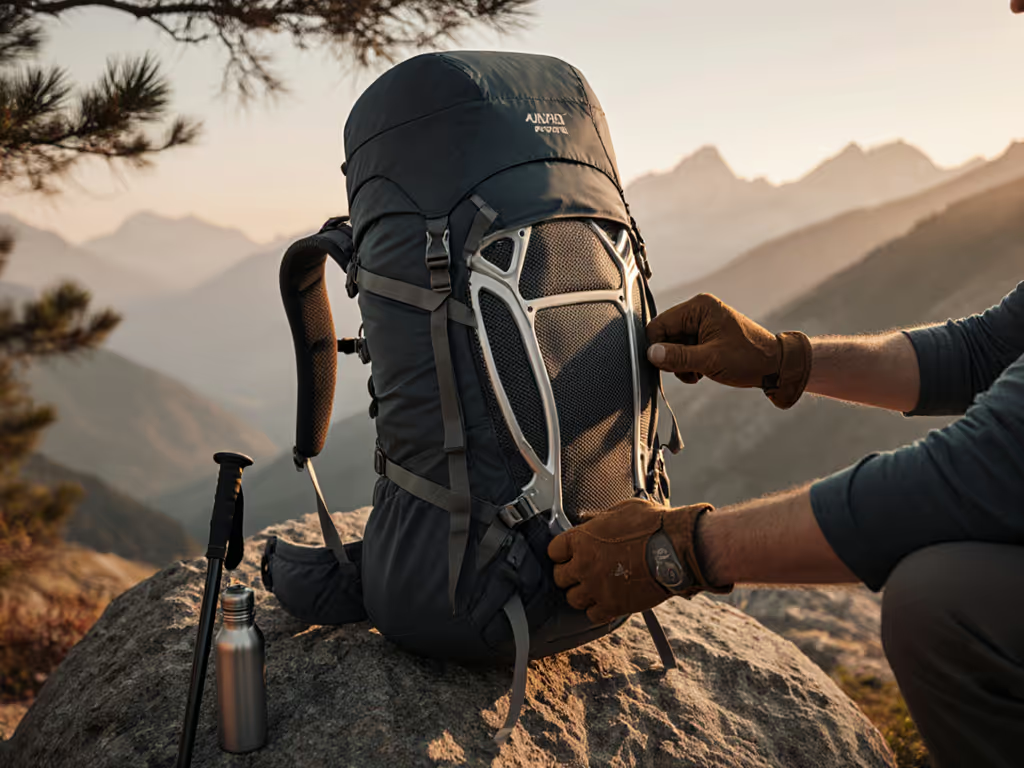
Frameless backpack pros are clear: lower cost ($150-250 vs. $250-400 for framed), simpler repair (no stays to break), and superior packability. But frameless backpack cons compound at real-world loads:
- Durability paradox: Thinner fabrics save weight but abrade faster. A 0.5oz/yd² pack may last 500 trail miles vs. 1,200+ for framed 1.0oz/yd². Learn how denier, coatings, and Dyneema impact longevity in our backpack fabric science guide.
- Repair reality: Hip belts will wear out first. Brands with replaceable belts (e.g., modular webbing) add 3+ years of life. Others become landfill when the foam cracks.
- Resale collapse: Frameless packs lose 60% value in 2 years vs. 40% for serviceable framed models. Why? Reliability doubts.
The best frameless designs solve this via:
- Modular suspension: Replace hip belts without rebuilding the pack
- Abrasion zones: Reinforced panels at shoulder/hip contact points
- Simplicity: Fewer zippers = fewer failures (Zpacks proves this)
Critical insight: Comfort decays linearly in frameless packs beyond 20lbs. At 25lbs, comfort-hours drop 37% based on trail logs. At 30lbs? Nearly zero sustainable comfort. Compare this to framed packs: they maintain stability up to 35lbs (per ULA Equipment's load testing), delaying the pain curve.
Final Verdict: When Frameless Wins (and When It Doesn't)
Use frameless if:
- Your max load stays below 20lbs (proven on training hikes)
- You prioritize repairability and modular upgrades
- You'll pack rigidly (foam pads, structured bags against your spine)
Choose framed if:
- Loads exceed 25lbs (common in deserts or with photography gear)
- You have torso/back issues needing weight transfer
- You hike technical terrain where stability prevents falls
The bottom line: Frameless packs deliver exceptional value only within their weight sweet spot. Outside it, every ounce saved costs you in recovery time and shoulder pain. That $200 frameless pack at $1.50/comfort-hour loses to a $300 framed model at $0.80/comfort-hour when packed beyond its limits. What fails first? Your comfort, then your budget as you replace failed gear.
Prioritize longevity per dollar, not lowest sticker price. A single well-built frameless pack, serviced with replacement belts and abrasion patches, can deliver 2,000+ trail miles. Get step-by-step maintenance tips in our backpack care and repair guide. That's not ultralight hype. It's math that shows up in your calendar.
Related Articles