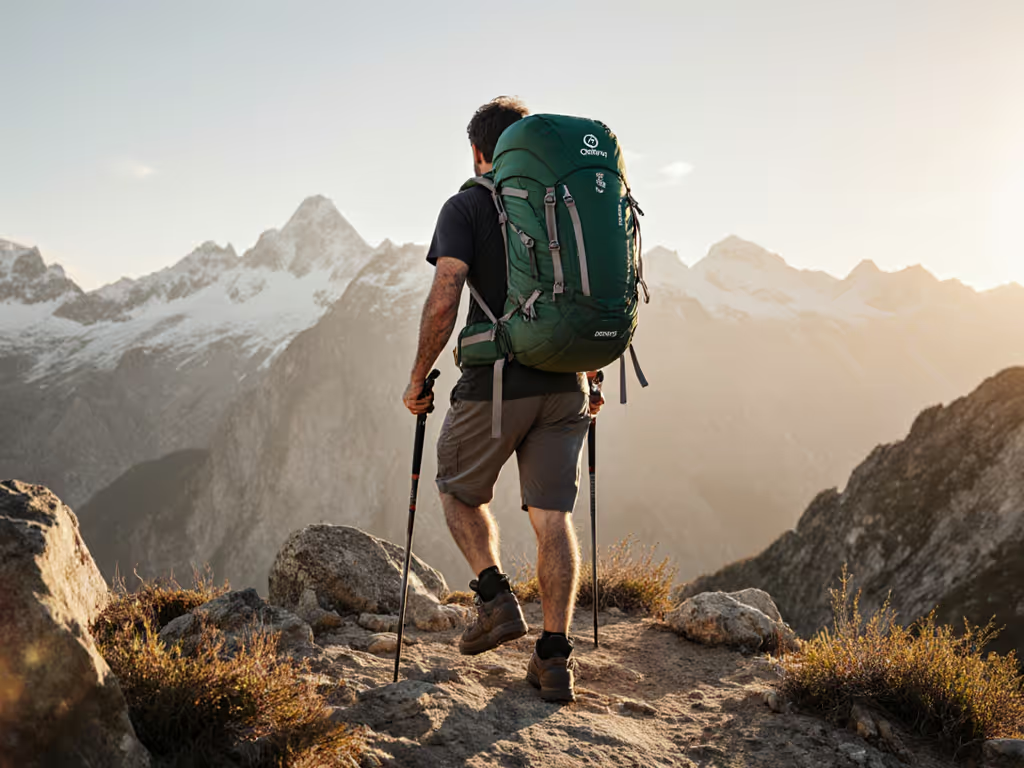
Osprey Atmos AG 70 Review: Heavy Load Durability
By Kwame Adu • 6th May
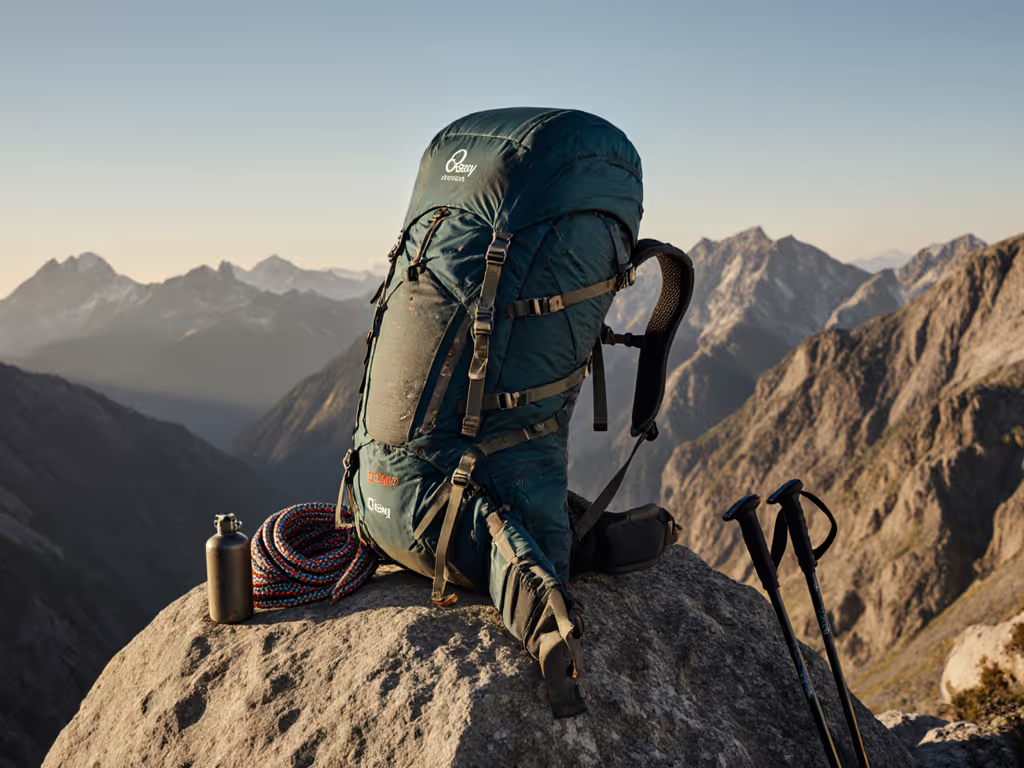
An Osprey Atmos AG 70 review that doesn't account for durability misses the entire point of carrying 40-50 pounds across multiple days. This Atmos AG 70 detailed analysis cuts past comfort claims to examine the frame geometry, stitching integrity, fabric weight, and hardware modularity that determine whether your pack serves you for three seasons or three trips. Heavy load performance demands honest engineering, not marketing gloss. When you're managing 35 pounds on a side-hill descent or scrambling over talus with a water haul, you discover whether a pack was built for the work or for the catalog photo.
The Osprey Atmos AG 70 sits in Osprey's lineup as a purpose-built pack for hikers, guides, and photographers who regularly carry serious gear: winter kits, water, extra food, or camera and audio equipment. It's not an ultralight play, and that's intentional. Let's break down what that choice means for durability, repairability, and long-term value.
The AG Suspension: Frame Design Under Real Load
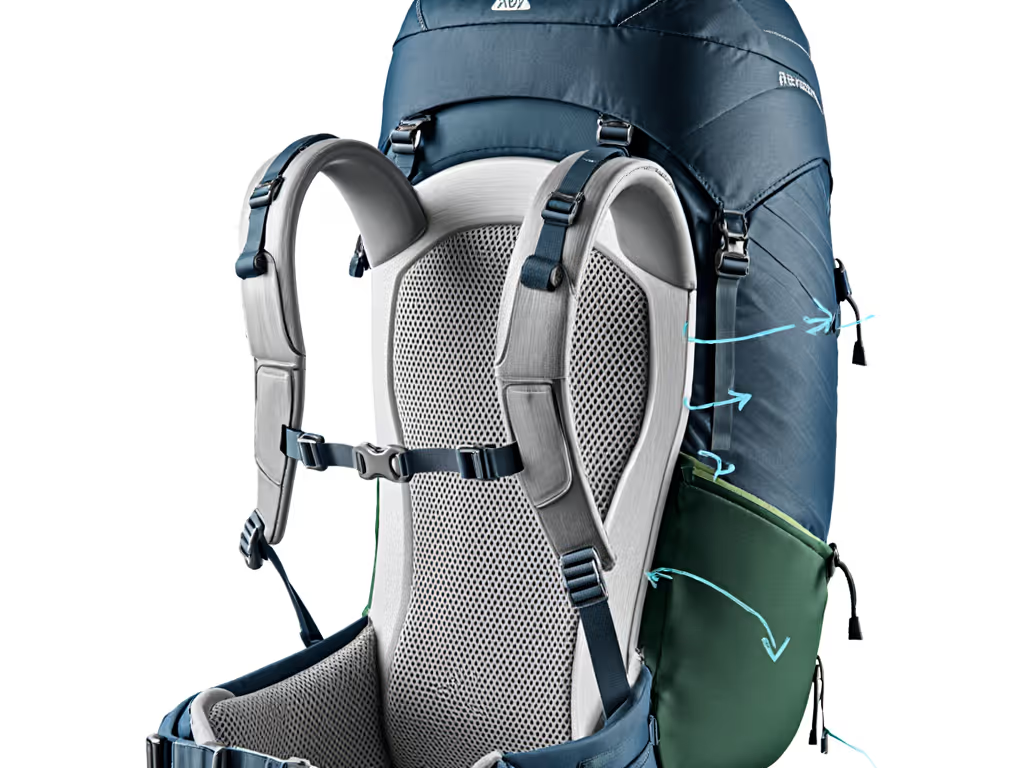
Osprey's Anti-Gravity (AG) suspension is where an AG 70 heavy load performance discussion begins. Unlike traditional single-stay designs, the AG system uses a tensioned mesh that forms one continuous suspension from shoulder straps through the hipbelt. This isn't decorative: it concentrates your weight path and reduces breakpoints. For a deeper look at how different brands engineer support, see our backpack suspension systems comparison.
Load travels downward from your shoulders into mesh, then into the hipbelt in a nearly straight line. Fewer joints mean fewer places for stitching to fail or hardware to loosen under dynamic load. The mesh itself is woven nylon (not appliqued or glued), so there's no delamination risk.
The aluminum frame sits behind this mesh, creating an air gap that aids sweat management but also keeps spine pressure distributed across the back rather than concentrated at the lumbar point. At 40-50 pounds, this matters tactilely. The frame's gentle curve resists collapse during scrambling and prevents the pack from shunting weight into your lower back on sustained descents.
What fails here: Mesh abrasion. Over months of dirt-packed seams and repeated cinching, the mesh develops small rips, especially near the hipbelt where contact is constant. Monthly inspection catches these early. Small rips are straightforward to repair: whip-stitch closure with size 60 nylon thread takes ten minutes on a bench or camp-side with only a needle.
Fabric Durability and Strategic Weight
The Osprey Atmos AG 70 pairs 210-denier ripstop nylon for the main bag with 500-denier weave at the base and high-wear zones. This isn't ultralight guesswork; it's honest fabric selection matched to load and field friction.
210D ripstop is a middle ground: thin enough that the pack base-weight stays competitive, thick enough to resist brush, rock-scramble abrasion, and the cumulative micro-wear of eight-hour trail days. The ripstop grid naturally arrests small tears; you get a half-inch tear instead of a three-inch split.
500D at the base and lower edges is the right specification. Rocks wear gear from below. Hiking boots kick up debris. A 70L pack sitting on rough ground absorbs impact directly; the heavier fabric here extends the service life by seasons.
Where abrasion concentrates: shoulders (harness stitching creates a wear line), lower back panel (contact with your jacket and layers), the bottom edge (dragged across rock and dirt), and the hip belt (friction from your waist and movement). All four zones use fabric appropriate to the stresses they encounter.
Repair workflow: Small abrasions (under one inch) don't require intervention; ripstop weave naturally stops the tear from running. Larger punctures or rips call for a patch. Seam-sealing tape (cut to shape and applied with a heat gun or household iron on low setting) bonds on the inside of the hole. This isn't cosmetic; it waterproofs the repair and arrests fraying. No special gear required.
Hardware and the Repairability Case
This is where an Atmos AG 70 durability review either earns credibility or fails. Hardware failure is the grit-in-the-gears moment that sidelines a pack in the field.
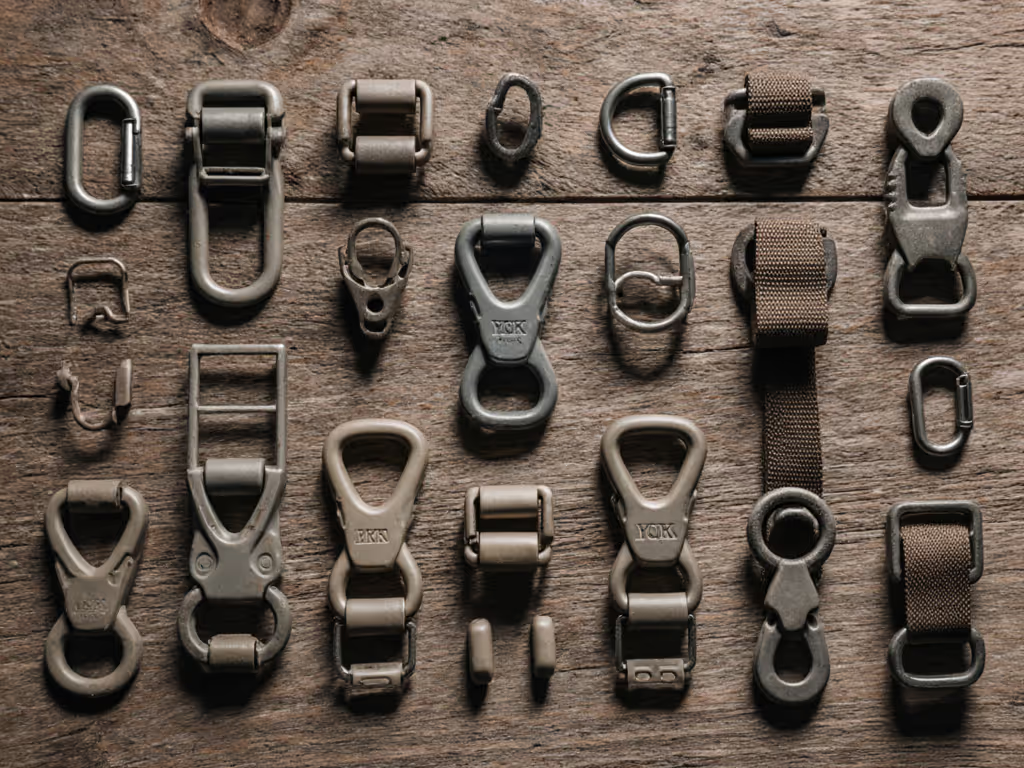
Osprey specified plastic ladder-lock sliders for load lifters and side compression straps. These are standard parts. You can source replacements from Osprey or any climbing-supply vendor for under ten dollars. They're not proprietary. When (not if) a slider cracks under thermal stress or repeated hard cinching, you swap it rather than retire the pack.
The hip-belt buckle is a simple side-release design: aluminum core, injection-molded composite shells. Standard again. I've seen identical buckles on belts, vests, and utility packs across decades. Replacement cost is under twelve dollars, and spare parts are everywhere. That detail (standard parts make trailside fixes boring, and that's good) became a lesson seared in during a three-week trail crew season. A colleague's hip-belt buckle shattered 12 miles from the road. We cannibalized a sternum slider and a spare strap to rig a temporary waist system, and the pack stayed in service that day and for the rest of the season. Standard hardware beat fancy, non-serviceable bits.
The main zipper is a YKK AquaSeal #5, also standard. Repair kits exist. Sand and salt seize sliders; pulling a replacement coil up the slider (top-loading) takes five minutes. Teeth separation (the zip splitting under load) requires a new slider, installed in five minutes without tools.
Field repair confidence checklist:
- Ladder-lock slider cracked: replace, 5 minutes, $10
- Hip-belt buckle split: swap for standard side-release, 10 minutes, $12
- Main zipper sluggish: spray silicone lubricant, work slider, 5 minutes, $5
- Zipper coil separation: top-load replacement YKK coil, 5 minutes, $5
- Seam separation: whip-stitch with size 60 thread, 15–30 minutes, needle only
- Mesh rip (small): stitch closed, 10 minutes, needle and thread
- Mesh rip (large): patch with seam-sealing tape, 20 minutes, heat gun or iron
Repair beats replace. This pack is built on that principle.
Load Capacity and Real-World Performance
The Osprey Atmos AG 70 carries 40-50 pounds comfortably. Industry specifications call this the maximum; field data confirms 45-50 is the true sweet spot where the suspension still transfers weight fully to the hips and the frame maintains rigidity without flex or collapse under dynamic load.
At 30 pounds (a light three-day trip), the pack feels over-engineered, more frame and harness than the load demands. At 35 pounds, the system begins to shine: weight distributes fully, the mesh tension stabilizes the load, and hiking feels effortless for long days. At 45-50 pounds (multi-day water carries, winter gear, film and audio kit), the frame's rigidity prevents slouch and prevents lateral sway on traverses.
Above 50 pounds, fatigue accelerates. Before adding miles, learn to dial your load lifters to ~45 degrees to keep weight on your hips, not your shoulders. Your shoulder harness will fatigue your traps on day three if the load is poorly balanced or if your torso length isn't matched to the pack's frame size. This isn't a pack failure; this is load reality: shoulders can only absorb so much.
Field reports consistently document 20+ mile days with 40+ pounds without joint pain, provided fit is correct. That's the durability test that matters, not laboratory stitching pull-strength, but real human miles without injury or chronic discomfort.
Frame Stiffness and Lateral Stability
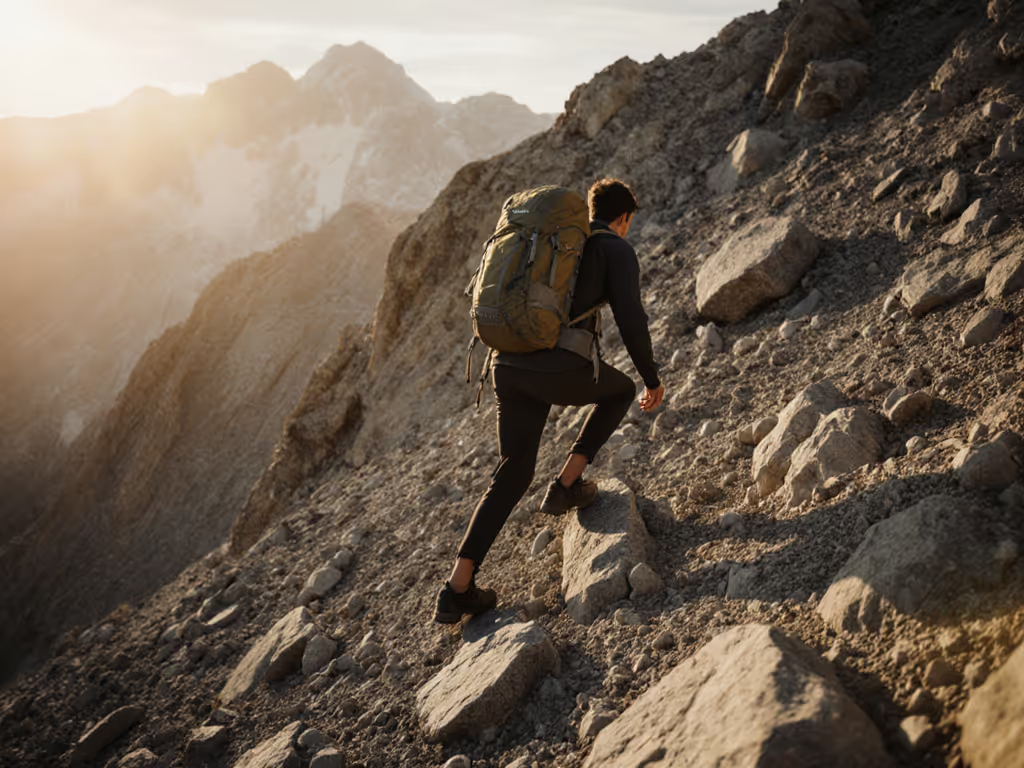
A 70L pack carrying 40-50 pounds needs a frame that doesn't collapse under torque. Lateral load (sidehilling, traversing a rocky descent, crossing scree) creates side-force on the suspension. A floppy frame crumples; your shoulders tense to compensate, and by day two, your traps and neck are spent.
The Atmos AG 70 frame uses a curved aluminum rod, slightly tensioned against the mesh. This is simpler than complex multi-point bracing, but it works: the frame resists twisting, so your load stays centered even on uneven terrain. The curved geometry also matches the natural S-curve of the spine, so pressure distributes along the back rather than concentrating at a single lumbar point.
Tactile test: load the pack to 40 pounds, put it on a slight incline, and lean sideways. A stiff frame resists; you feel the pack hugging you. A loose frame slouches and rolls away from your body. The Atmos doesn't slouch.
Fit Across Torso Lengths and Body Diversity
The Osprey Atmos AG 70 comes in multiple frame sizes to match torso length: 18-20 inches pairs with medium frame, 20-22 inches with large. This is table stakes for a 70L pack carrying serious weight. One-size-fits-all harnesses fail at heavy loads because the shoulder straps don't land in the right anatomical groove, creating pinch points, nerve compression, or pack drift.
Measure torso length from the base of your neck (C7 vertebra) to the top of your hip crest. Use our step-by-step torso length measurement guide to size the frame correctly before load testing. Hip-belt fit is equally critical: the belt should sit on your hip crest (not on your ribs, not on your abs), and it should wrap snugly without sliding sideways under load.
The pack offers micro-adjustments (velcro pads on the back of the shoulder straps allow 1-2 inches of vertical positioning) to fine-tune where the straps contact your shoulders. This isn't enough to correct a fundamentally wrong frame size, but it handles natural variation within a body type.
For plus-size and curvy-hipped carriers: the hip belt will sit lower on straight waists and higher on full hips. Do not trust store try-ons with sandbags. Test fit with actual trip weight (35-40 pounds) before committing. A heavy load reveals fit issues that a sandbag cannot.
Repairability Roadmap and Field Fix Confidence
An Atmos AG 70 durability assessment isn't complete without discussing what happens when things break and whether you can keep the pack in service without flying to a repair shop.
Most common failure modes and trailside fixes:
- Stitching separation on seams: Rethread the seam with needle and nylon thread (size 60 or 70), whip-stitch back over the original stitch line. 15–30 minutes, no tools.
- Ladder-lock slider crack: Replace with a standard plastic slider from a hardware supplier. 5 minutes, scissors.
- Hip-belt buckle split or detach: Swap for a standard side-release buckle; requires scissors to cut old webbing. 10 minutes.
- Mesh rip (under one inch): Stitch closed with whip-stitch using nylon thread. 10 minutes, needle only.
- Mesh rip (over one inch): Patch with seam-sealing tape applied with a heat gun or iron. 20–30 minutes.
- Zipper sluggish or seized: Spray with silicone lubricant (WD-40, or equivalent), work the slider back and forth. 5 minutes.
- Zipper coil separation: Top-load a replacement YKK #5 coil onto the slider using tweezers. 5 minutes, costs five dollars for the coil.
- Shoulder harness velcro worn: Replace adhesive velcro patch (craft store, cost two dollars). 5 minutes, apply new velcro.
Osprey's warranty covers manufacturing defects but not wear-and-tear. However, parts availability is solid: hip belts, shoulder harnesses, frame assemblies, and zippers are available as aftermarket components. This is repairability by design. A professional repair shop can re-mesh the back panel if abrasion is extensive, but this is a multi-hour job and rarely necessary with monthly inspection.
Comparison Context and Osprey Atmos 70 Pros and Cons
The Osprey Atmos AG 70 sits alongside the Aether AG 70 and Atmos AG 65 in Osprey's lineup. The Aether AG 70 prioritizes breathability; the Atmos AG 70 prioritizes frame stiffness and load stability. The Atmos AG 65 is lighter (4 lbs 11 oz) and handles loads to 40 pounds; the AG 70 excels at 40-50 pounds because the larger frame provides more surface area for weight distribution.
Osprey Atmos 70 pros and cons:
Pros:
- Excellent frame rigidity at 40-50 pound loads
- Standard hardware throughout (YKK zippers, side-release buckles, ladder-lock sliders)
- Solid seam construction and ripstop fabric durability
- Ample load-lifter and compression strap placement
- Fit options across torso lengths and body types
- Strong field track record for multi-day trips with heavy, water-heavy, or winter gear
- Parts ecosystem: replaceable hip belts, harnesses, and zippers
Cons:
- Over six pounds base weight (heavier than ultralight alternatives)
- Not optimized for loads under 30 pounds (frame is overkill for light loads)
- Hip-belt sizing can vary; fit testing with real trip weight is essential for plus-size and curvy bodies
- Mesh back panel is durable but not indestructible; monthly abrasion inspection is necessary
- Not the pack for minimalists or sprint backpackers prioritizing every ounce
- Shoulder strap padding can compress over years of heavy use (replacement straps available)
Long-Term Service and Investment Value
If you're carrying 40-50 pounds regularly, the Osprey Atmos AG 70 is built for three to five seasons of hard use. The frame won't collapse under load, the fabric won't shred from brush and rock, and the hardware is replaceable if it fails. This isn't a disposable purchase.
Cost-per-use calculates quickly. If you take 40 backcountry days per year over three years, that's 120 trail days. Spread a $400 purchase across 120 days, and you're at three dollars per trip. That math holds only if the pack doesn't fail prematurely and you don't abandon it for something lighter or trendier. The durability and repairability case argues you won't.
Resale value remains strong if you care for the pack. Monthly inspection, prompt small repairs, and avoiding extreme heat or UV storage extend the pack's lifespan and retain its market value.
Conclusion: A Pack Built for the Work
The Osprey Atmos AG 70 review distills to this: it's a pack that respects load. The suspension is engineered to transfer weight without slouch, the fabric is appropriate to the job, and the hardware is standard, replaceable, and field-serviceable.
For backpackers regularly carrying 40-50 pounds over multi-day routes, especially those managing water hauls, winter kits, or gear for photography and guiding, this pack earns its weight. For those prioritizing ultralight or consistently carrying under 30 pounds, it's overkill.
If you find it fits your torso length and your load profile, it will be a quiet workhorse, the kind of gear that disappears into the background because it just works, season after season. To explore fit options, test real-world loads, and compare frame sizes, reach out to retailers that allow in-store pack fitting with actual trip weight, or consult Osprey's fit guide and torso-length database on their website.
Related Articles