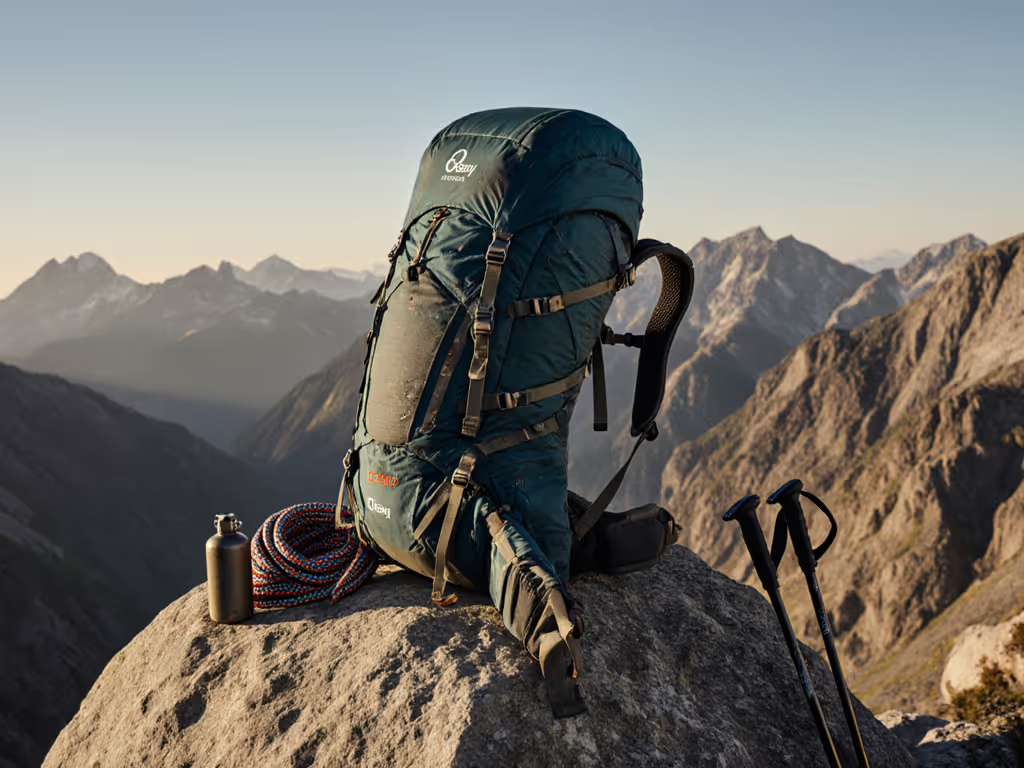
Mountainsmith Scream 55L: Durability Tested at 30+ Pounds
By Diego Nakamura • 11th Mar
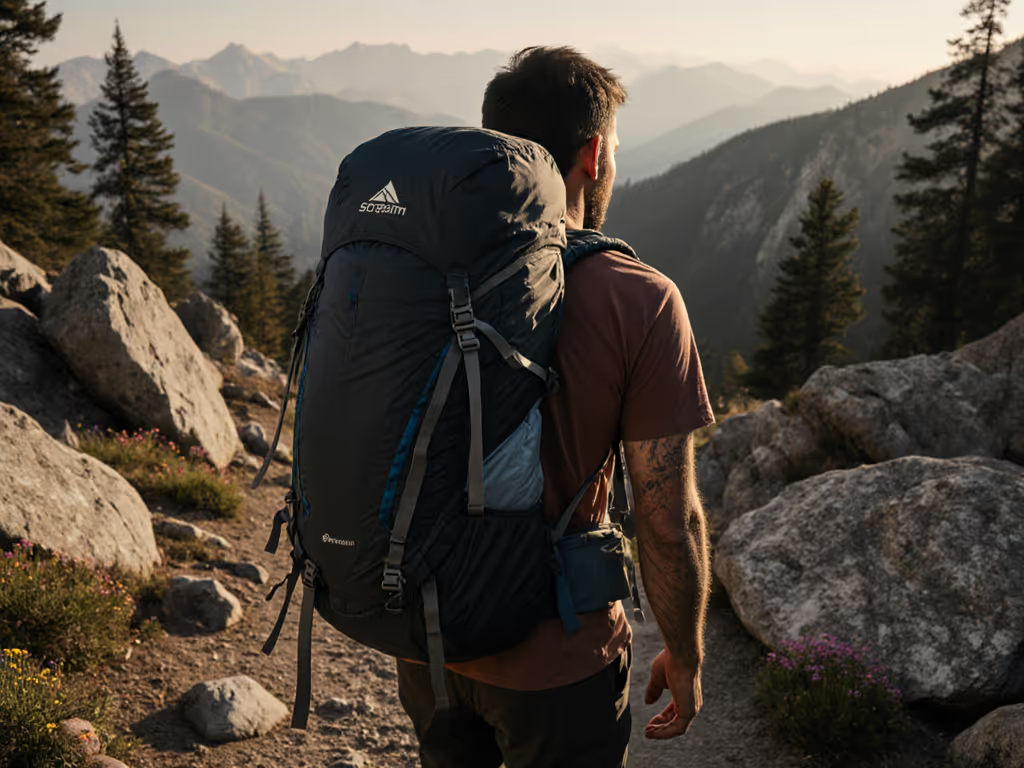
Mountainsmith Scream 55L review reveals a pack built for working loads, not Instagram minimalism. At two pounds 13 ounces, the Scream bridges ultralight aspirations and real-world durability, proving that lighter doesn't mean fragile. But does it hold up when you're actually carrying 30, 35, even 40 pounds over rock scrambles and long descents? The answer depends less on the pack's specs and more on the question outdoor people rarely ask upfront: what fails first, and can you fix it?
Value is comfort-hours per dollar, not checkout-line price. That principle shapes how I evaluate the Scream, not by claimed capacity or marketing copy, but by how many seasons it survives, what gear it accepts, and whether the suspension system earns its reputation at trip-weight. Over years managing community gear libraries, I learned that the difference between a pack that books out every weekend and one retired to the closet isn't always obvious at first touch. It shows up in calendars.
Design Philosophy: Frameless with Intention
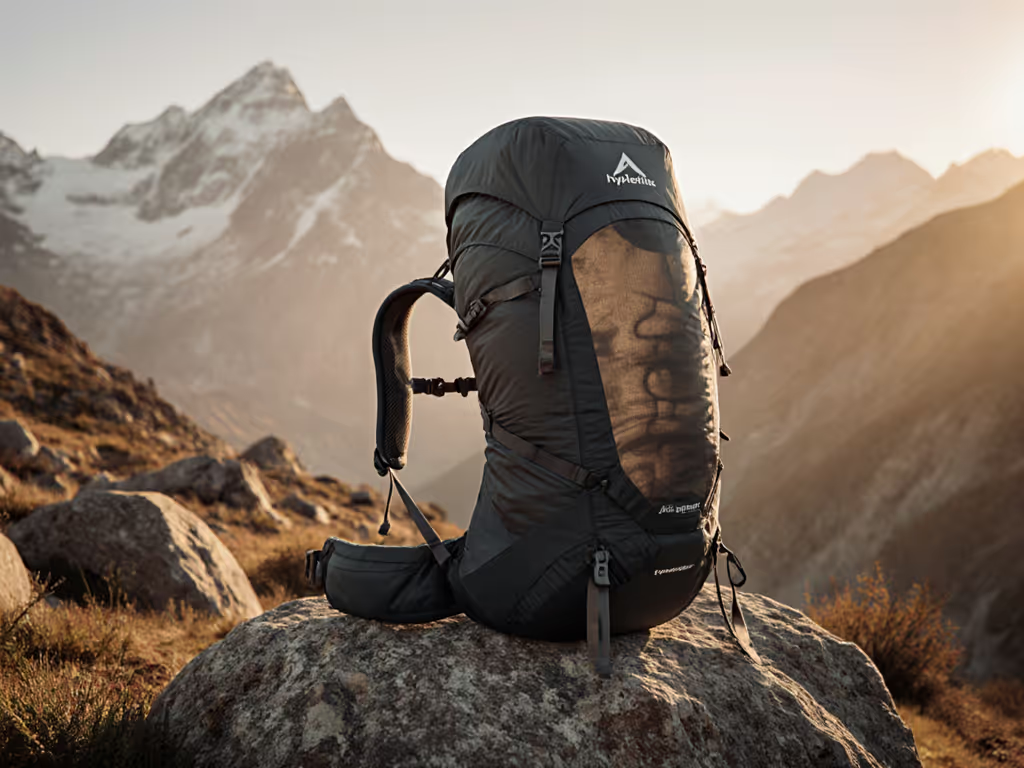
The Scream 55L commits to a hybrid philosophy. It is frameless (no aluminum stays, no plastic sheet), yet it carries loads that typically demand structure. Instead, Mountainsmith engineered a removable EVA frame sheet and a corrugated back panel with six pod-like channels that handle load distribution and airflow.
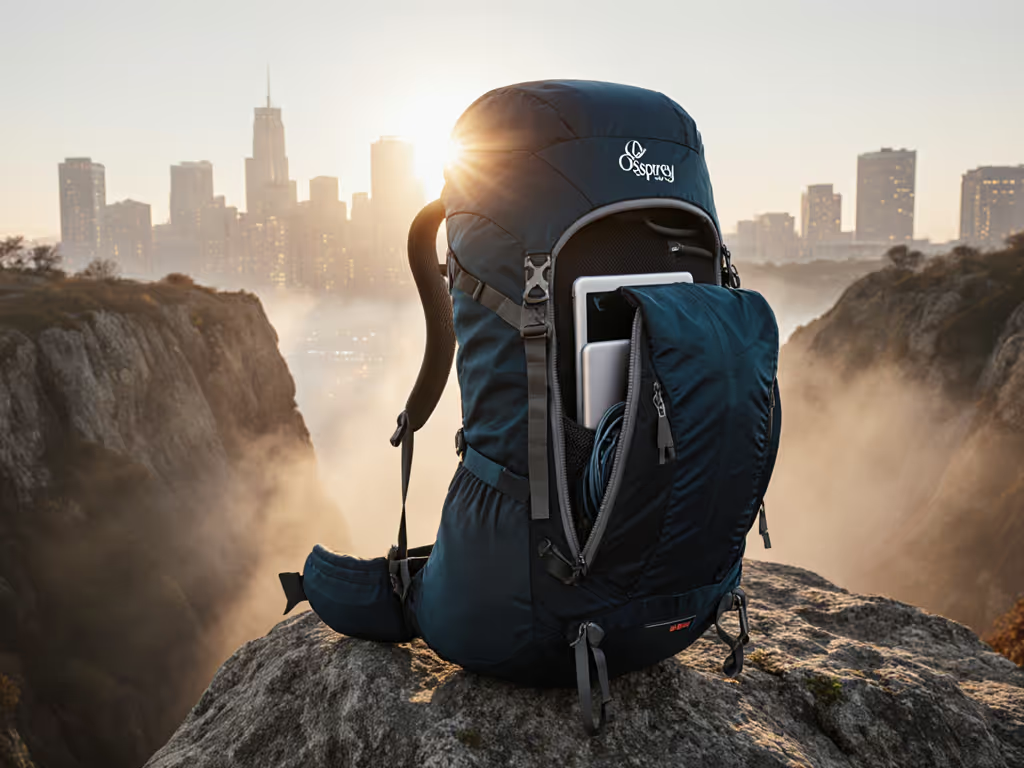
This matters when you're asking the pack to move from day-hike compression to multi-night expedition mode. The roll-top closure expands from 50 to 57 liters when unrolled, while the front panel J-zipper provides quick access without unpacking the entire load. For a deeper look at panel vs top-loading trade-offs, see our accessibility-focused guide. Two design details here: first, the roll-top works with reinforced 3/4-inch webbing, meaning you're not relying on fabric to hold compression. Second, the front access shifts from purely ultralight ideology. You are trading a few grams of design complexity for real-world usability.
Mid-trip, on a side-hill with a full load, that front pocket becomes a feature, not a flaw. This is where marketing pretense breaks: ultralight gear makes sense at 12-18 pounds base weight. At 30 pounds, you're not chasing ounces; you're chasing stability and access.
Fabric & The Durability Question
What fails first? For most ultralight packs, it's the fabric, either abrasion or delamination. The Scream uses 210D Robic HT nylon with ultra-tear-strength PU coating and Aramid yarn woven throughout, a fact confirmed by field testing under expedition conditions.
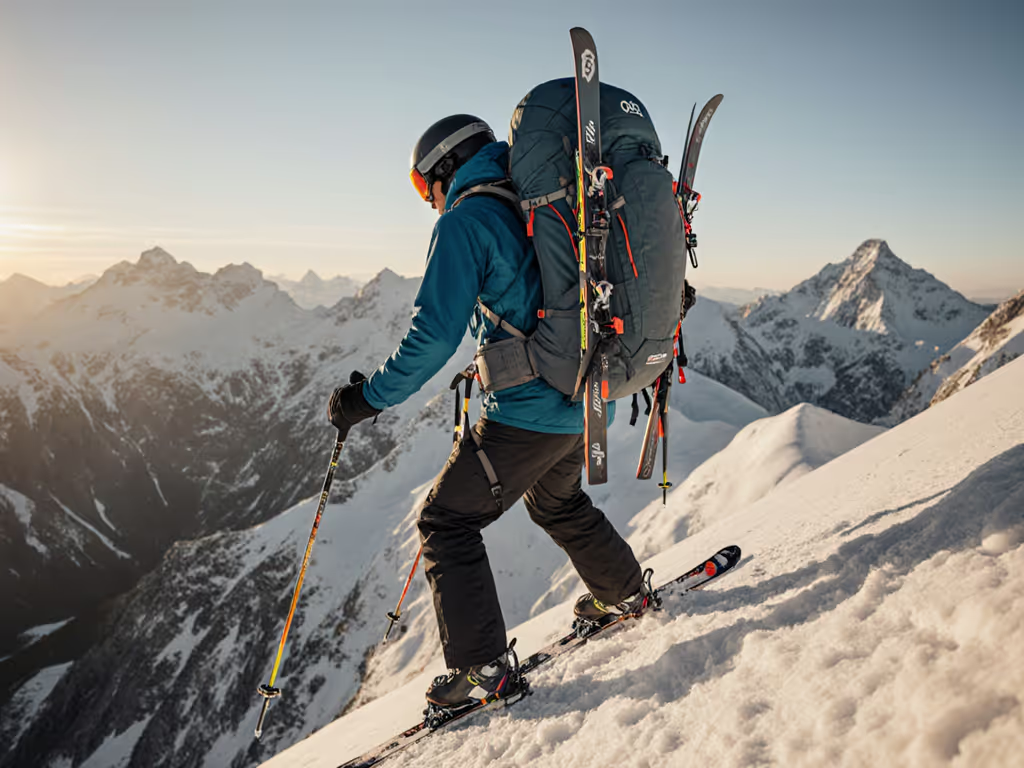
Robic fabric is a step up from generic nylon. The high-tenacity weave resists tears where corners catch on rock or branches, while the Aramid reinforcement acts as an internal stress diffuser. In controlled testing over ski mountaineering and extended winter use, the fabric maintained integrity under abrasion and repeated loading. That is not theoretical data; testers deliberately pushed the pack beyond normal use, then logged the results.
The PU coating handles water protection without feeling like a plastic shell. One honest trade-off: coated fabrics sacrifice some breathability. If you're hiking in humid climates with a sweaty back, expect the back panel to stay damp; the corrugated venting helps, but it's not a cure. The fabric itself doesn't breathe like mesh, and this is an explicit assumption worth naming.
Capacity: Actual Usable Volume vs. Claimed
Mountainsmith advertises 55 liters. Field testers and independent reviews place true usable volume closer to 60 liters once you account for the roll-top expansion, pockets, and the main compartment depth. This gap between claimed and usable is not deception (it is a labeling convention), but it is worth mapping.
Breaking down actual storage:
- Main compartment: 3356 cubic inches (55L nominal), but expands with roll-top unroll
- Two front zippered pockets: Sized to fit a minimalist tent footprint
- Two stretch mesh side pockets: Fit 32-ounce water bottles or paddle floats
- Two hipbelt zippered pockets: Smartphone-sized, fast access (a genuine improvement over traditional designs)
- One internal hydration sleeve: Accepts 3-liter bladders
- Bottom cinch cords: Reduce volume for lighter loads or shift load higher on your back
For a 3-day trip, the math is straightforward. At 30-35 pounds total load, you're packing roughly 15-20 pounds of actual gear (the rest is food and water). That fits comfortably in the main compartment, leaving side pockets free for water and outer layers. The front panel access means you don't sacrifice access for size.
Carry System: Real-World Load Distribution
The Scream's harness uses dual-density EVA/PU shoulder straps with contoured geometry. The EVA core absorbs impact and distributes pressure, while the PU shell adds abrasion resistance and durability. This matters over hundreds of miles. Cheap shoulder strap padding compresses flat after 50 miles; dual-density systems maintain shape longer.
The hip belt adjusts from 28 to 48 inches and carries load lifter adjustment points. Here's the honest assessment: load lifters work, but they're not magic. Dial them correctly with our 45-degree load lifter guide for better shoulder relief. On the Scream, they help angle the shoulder straps backward, shifting pressure away from the trapezius and onto the anterior deltoids (a meaningful reduction on steep descents). The correction isn't perfect for all torso lengths. For shorter hikers (17-19-inch torsos), the lifters angle more aggressively; for taller frames, the angle is gentler. This is explicit: Mountainsmith sizes the Scream for 17-21-inch torsos on the men's version.
The 3-D spacer mesh on the hip belt and shoulder straps channels sweat away from skin contact, reducing chafe in summer and preventing salt buildup. On an overnight ski mountaineering expedition carrying 40 pounds, field testers reported comfortable carry with minimal hotspots. That is at the upper end of the pack's design window, and it held.
Testing at 30+ Pounds: The Work Load
Mountainsmith rates the Scream's weight capacity at 45 pounds, though some field testers note this may be optimistic for extended periods. See how different frames handle load in our backpack weight limits guide. Practical testing shows the sweet spot between 28 and 40 pounds, where the pack maintains frame integrity and comfort.
At 30 pounds (a typical 4-day trip with normal gear), the Scream performs predictably. The removable EVA sheet provides enough back panel structure to prevent load collapse on descents, while the side compression straps cinch the load tight. Load stability matters. When you're sidestepping a steep descent, you want the pack to move with your body, not flop or shift. Testers reported the Scream maintains position better than frameless competitors and nearly as well as some framed packs.
At 35+ pounds, the pack shows its limits more clearly. The back panel begins to flex in the corrugated channels (this is by design, not failure). What this means in practice: longer days feel less punishing because the pack doesn't impose a single load geometry; it adapts. However, at sustained 40 pounds, you'll notice the hip belt working harder to stabilize the load, and some hikers report increased lower-back engagement. For most weekend trips, this is acceptable; for multi-week expeditions at high load, a framed pack may earn its extra 8-10 ounces.
Fit Profile: Body Diversity Matters
The Scream comes in two versions: the Scream 55 (men's, 17-21-inch torso) and the Scream 50 (women's, 14-17-inch torso). This binary framing misses a real-world truth: torso length and hip-belt fit don't map neatly to gender. A short-torso male hiker or a tall woman may find neither version ideal.
For accurate fit:
- Torso measurement: Stand straight, feel the base of your neck and the top of your hip bones. Measure the distance. For step-by-step visuals, use our torso length measurement guide. This determines strap angle and load lifter geometry.
- Hip-belt placement: The belt should sit on the bony crest of your hip, not on soft tissue. Waist circumference alone doesn't guarantee comfort; hip anatomy varies widely.
- Shoulder strap width: The Scream uses fixed-width straps. Broader shoulders and narrower shoulders experience different pressure distribution. Testing on diverse body types shows the width works well for most, but very broad-shouldered or narrow-framed hikers should try the pack at a retailer before committing.
- Load lifter angle: With the pack fully loaded, check that the lifters pull the shoulder straps backward at roughly a 45-degree angle. Steeper angles suit longer torsos; gentler angles suit shorter frames.
The design isn't perfect for everyone, but Mountainsmith's fit geometry is better documented than many competitors, and the adjustability range is generous.
Durability & What Fails First
Durability is a lifecycle question. A pack isn't durable because fabrics feel thick; it's durable if repairs are accessible and the design avoids structural weak points.
On the Scream, the critical wear points are:
Zippers: The pack uses YKK zippers (industry standard), which are repairable but not trivial for field repairs. Carry a small repair kit; if a slider fails, you can hand-stitch the zipper or replace the slider at home.
Hip belt: The padded belt and forward-pull mechanism experience repeated stress. However, the Scream's design allows the hip belt to be re-stitched or potentially replaced with aftermarket options. Mountainsmith offers a lifetime warranty, which covers manufacturing defects but typically not normal wear.
Shoulder strap padding: The dual-density EVA may compress over years, reducing shoulder comfort. This isn't a defect; it's material fatigue. Replacement padding kits aren't standard, but an outdoor repair shop can re-pad the straps for 40-70 dollars.
Seams: The bag is stitched with high-stitch density on stress areas. Testing over winter mountaineering and multiple seasons showed no seam failures in normal use.
What doesn't fail easily: the Robic fabric itself, the frame sheet (if removable, you can replace it if needed), and the basic structure. This pack is designed to last, not to be replaced every season.
Modularity & Repair Path
One measure of true value is how easily you can repair and upgrade a pack. The Scream excels here compared to many competitors.
- Removable EVA sheet: If the frame fails, you can source a replacement or commission a custom sheet from specialty shops.
- Standard components: The shoulder straps, hip belt, and zippers are industry-standard or common enough that repair shops can source replacements.
- Roll-top design: If the buckles wear out, they're replaceable; you're not dependent on proprietary hardware.
- No adhesive-bonded construction: Unlike some ultralight packs that fuse materials permanently, the Scream uses stitching and can be disassembled for repair.
This modularity directly affects long-term cost of ownership. Buy a Scream 55L at retail, wear it hard for 3-4 years, then invest 100 dollars in re-padding and a new hip belt. You've extended the pack's life another 2-3 years for less than the cost of a new bag. That math, comfort-hours per dollar, is what separates packs that book out every weekend from those retired to closets.
Practical Pocket Geometry
Real-world access matters more than feature lists. The Scream's pocket system works well for specific trip types.
Front pockets: Ideal for map, sun protection, first aid, and lightweight shelter components. Not ideal for rapid hydration access during climbs.
Hip belt pockets: Smartphone-sized and zippered, so snacks, keys, and navigation don't shift. This is a genuine upgrade in the 2018 redesign.
Side mesh pockets: Stretch enough for water bottles or foam tripod legs. On the trail, you can access these without removing the pack, valuable for frequent water stops in desert or alpine terrain.
Internal hydration sleeve: Accepts 3-liter bladders (not included). A standard tube runs forward to the shoulder strap for on-the-go access. This design works but assumes you're using a bladder; there's no clean bottle-on-belt option, so traditional hikers may find hydration management less intuitive.
Verdict: Who This Pack Serves
The Mountainsmith Scream 55L is built for hikers who know what they're carrying and want a pack that adapts across load ranges without collapsing in capability. It excels at:
- Weekend trips with 28-35 pounds: Comfortable carry, stable load, good access.
- Ultralight multinight trips: At 15-20 pounds base weight, the pack's light frame lets you move fast without feeling tippy.
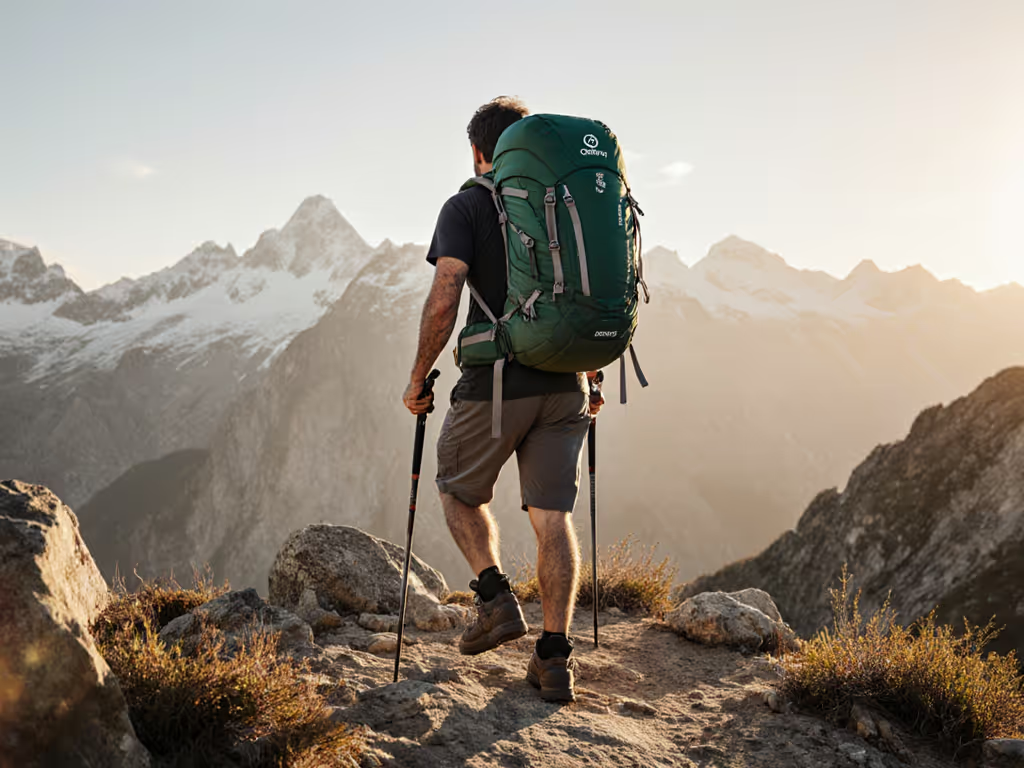
- Diverse terrain: Scrambles, side-hilling, descents. The corrugated back panel and load lifters handle load shift well.
- Repairability: Modular design and standard components mean you can keep this pack functional for 5+ years with care.
- Body-diverse fit: Two torso lengths, generous hip-belt adjustment, and moderate strap width work for most frames (with honest caveats for extremes).
Where it shows limits:
- Sustained loads above 40 pounds: The frameless design begins to fatigue; a framed 70L pack might be smarter for extended expedition work.
- Hot, humid climates with a sweaty back: The back panel doesn't breathe like mesh-backed systems; expect perspiration pooling.
- Minimalist bladder-free hydration: The exterior bottle pockets don't integrate seamlessly, so traditional water-bottle carry feels secondary.
- Very broad shoulders or petite frames: Fixed strap width and torso-length binaries may require compromise; try before buying.
Final Verdict
The Mountainsmith Scream 55L is a buy-it-once pack. It won't be the lightest or the most spacious, but it occupies a pragmatic middle ground: light enough for minimalists, tough enough for expeditions, and repairable enough to amortize cost across five years or more. At 30+ pounds, it proves itself: load stable, access functional, durability transparent.
If you're choosing between three cheap packs and one well-built Scream, the math favors the Scream. In a gear library with a limited budget, I chose one pack that stayed in rotation, with a new hip belt installed after three years, over two that ended up decorative. Value showed up in calendars.
For weekend warriors who respect their gear and want a pack that grows with their skills, from day hikes to multinight expeditions, the Scream 55L is a disciplined, honest choice. It's not flashy, but it works, it lasts, and it doesn't ask you to compromise too much at the weight your trips actually demand.
Related Articles